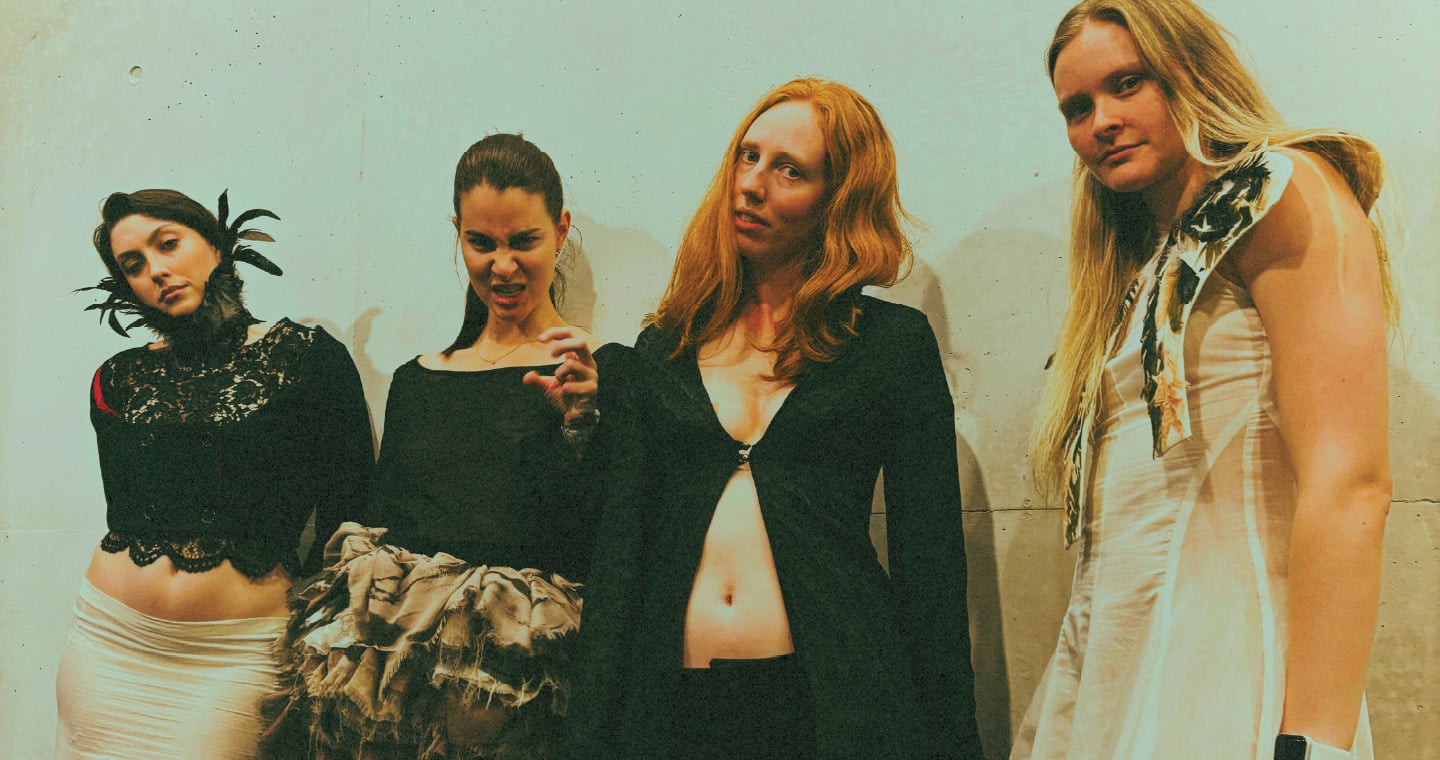
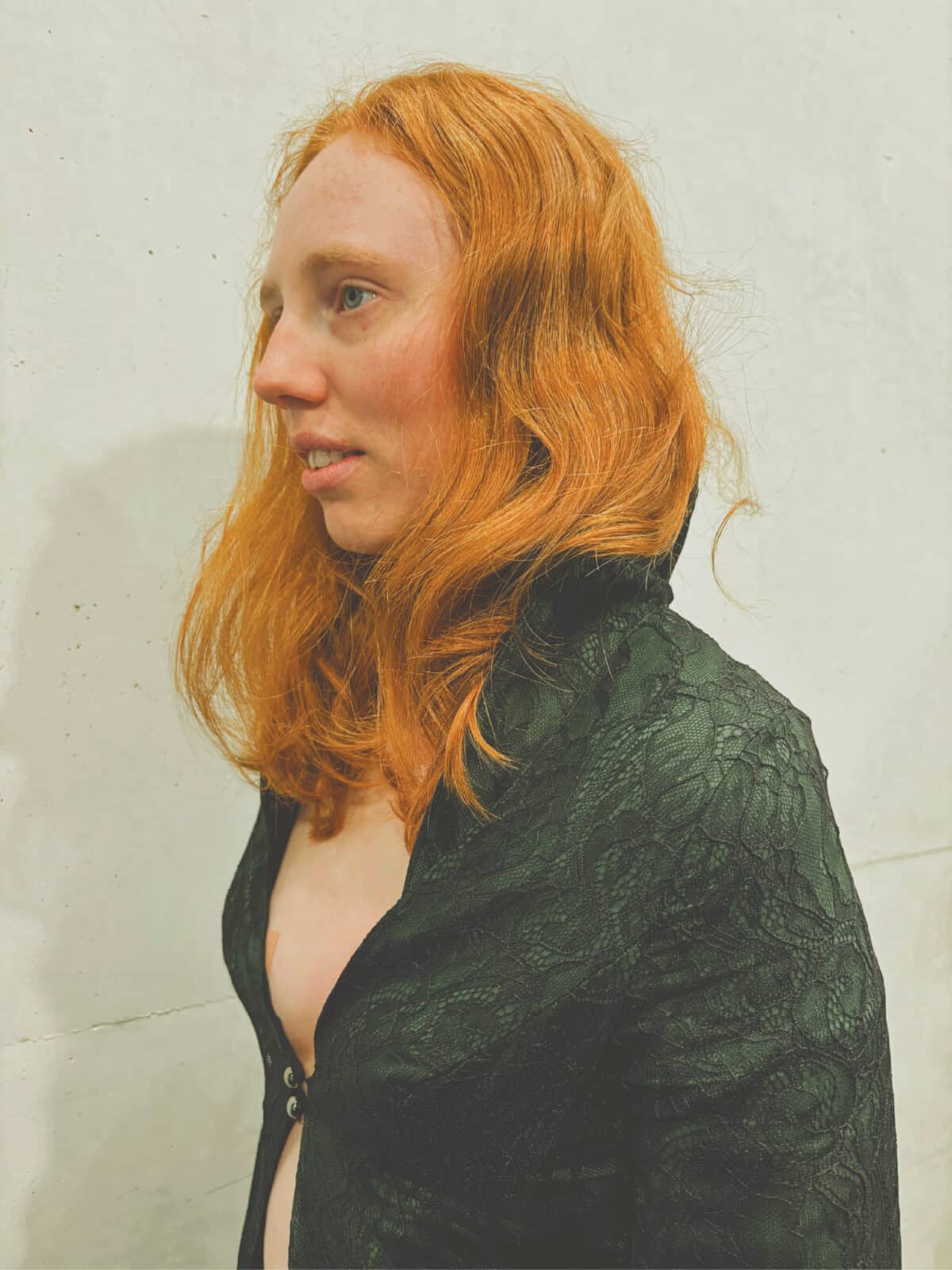
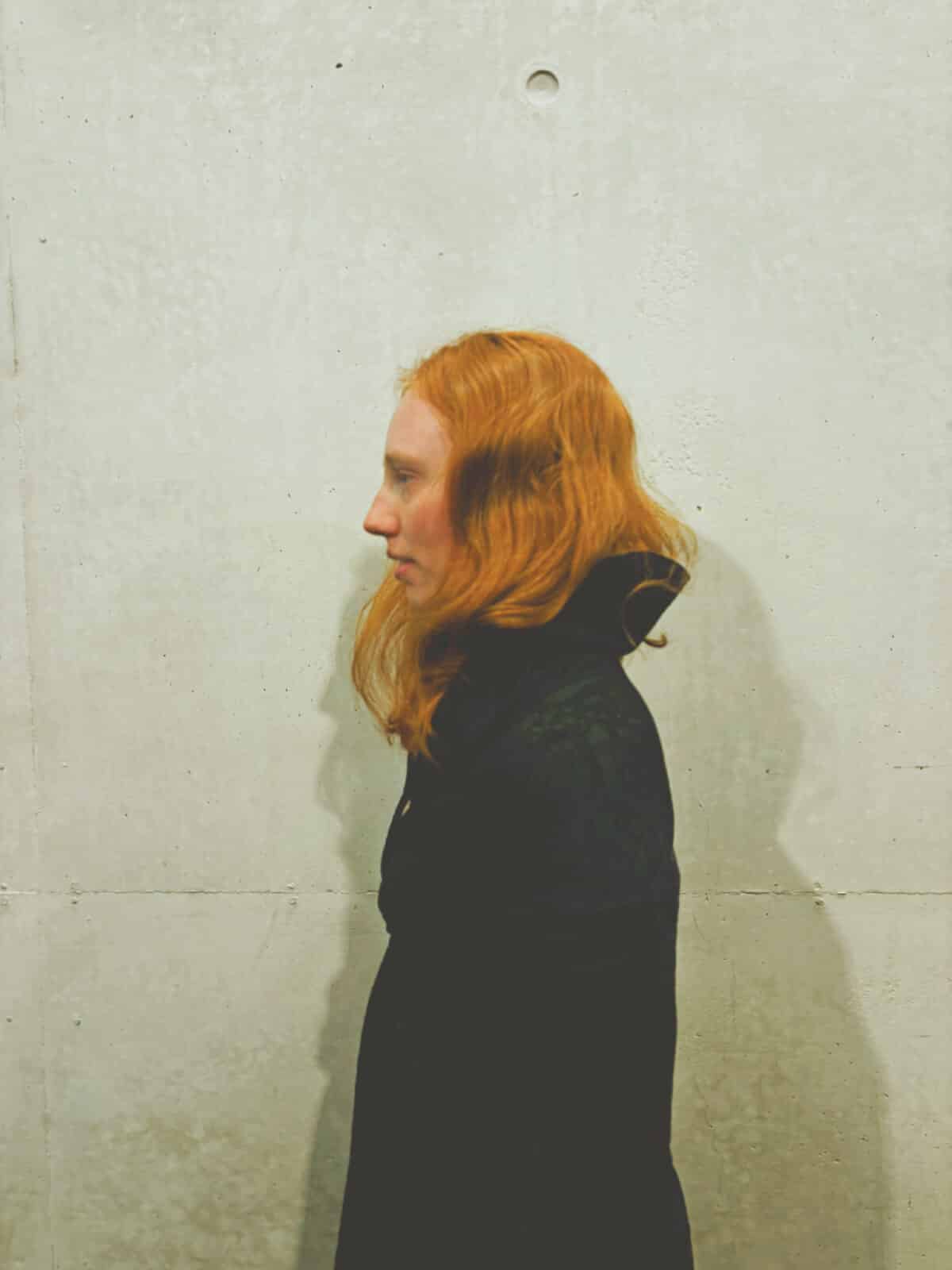
Drawing from my Irish Heritage and my personal connection to Ireland‘s untouched landscapes, my graduate collection titled ag filleadh ón soal eile, translating to returning from the otherworld, explores the superstitions and folkloric beliefs of nineteenth-century rural Ireland. During this time, many children and women suffered extreme torture and in some cases death, as a result of unexplainable illnesses, disabilities, and female hysteria. It was believed that individuals who suffered from this were abducted by faeries and taken to the Otherworld, with a changeling left behind in their place. This collection explores women who’s bodies and minds have been replaced by these fantastical entities, and are returning to their homes from the otherworld.
Malartán
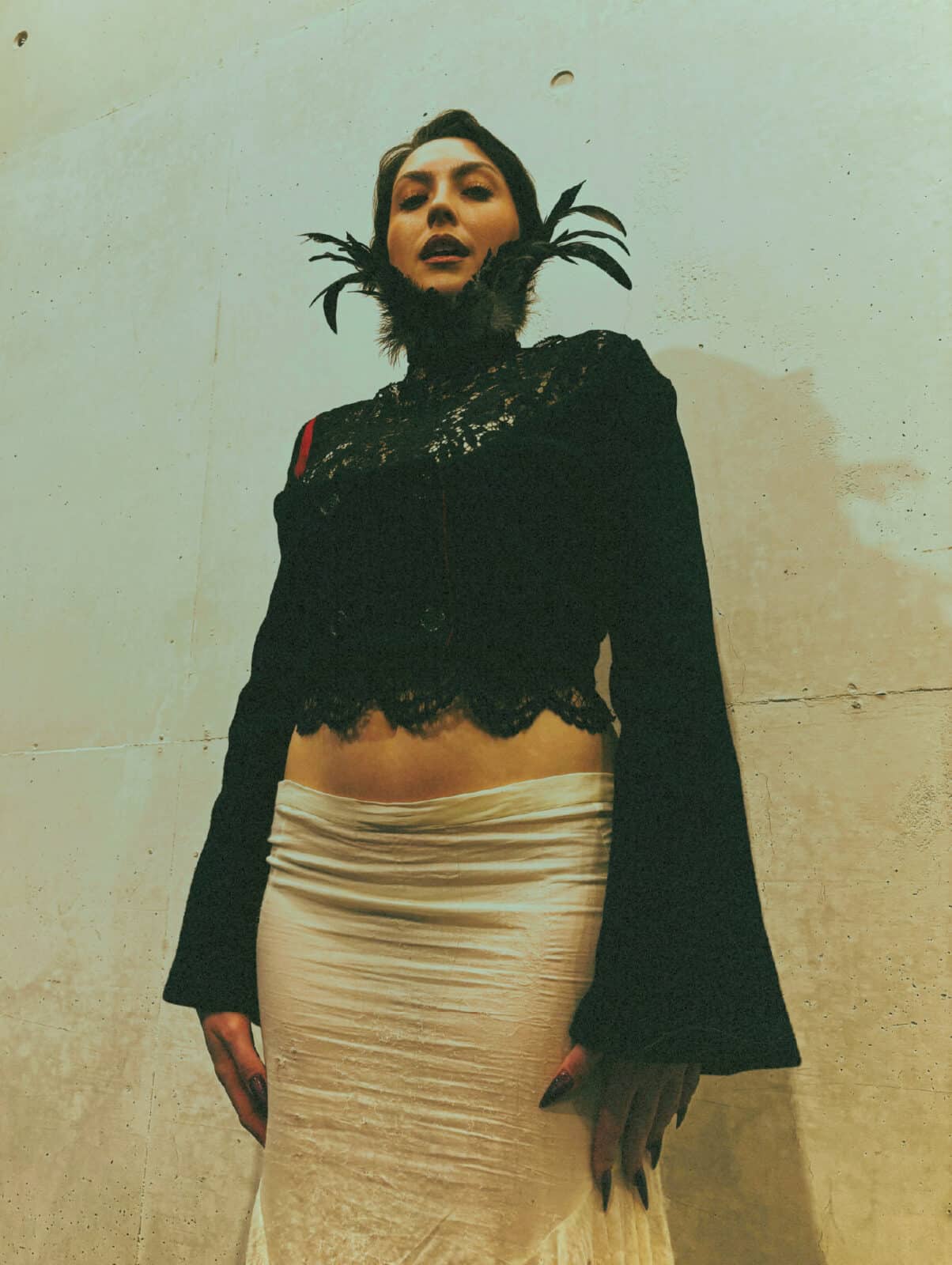
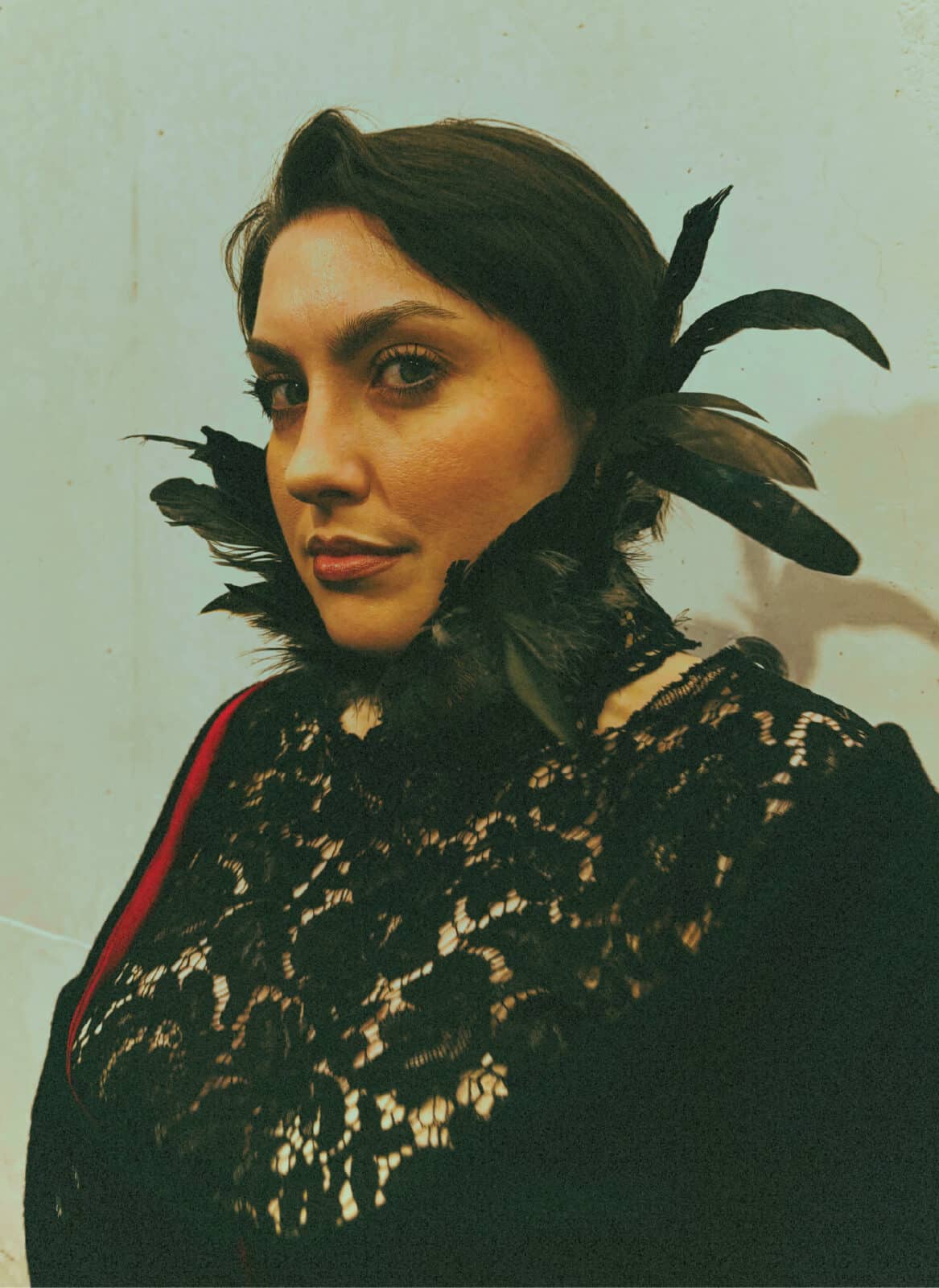
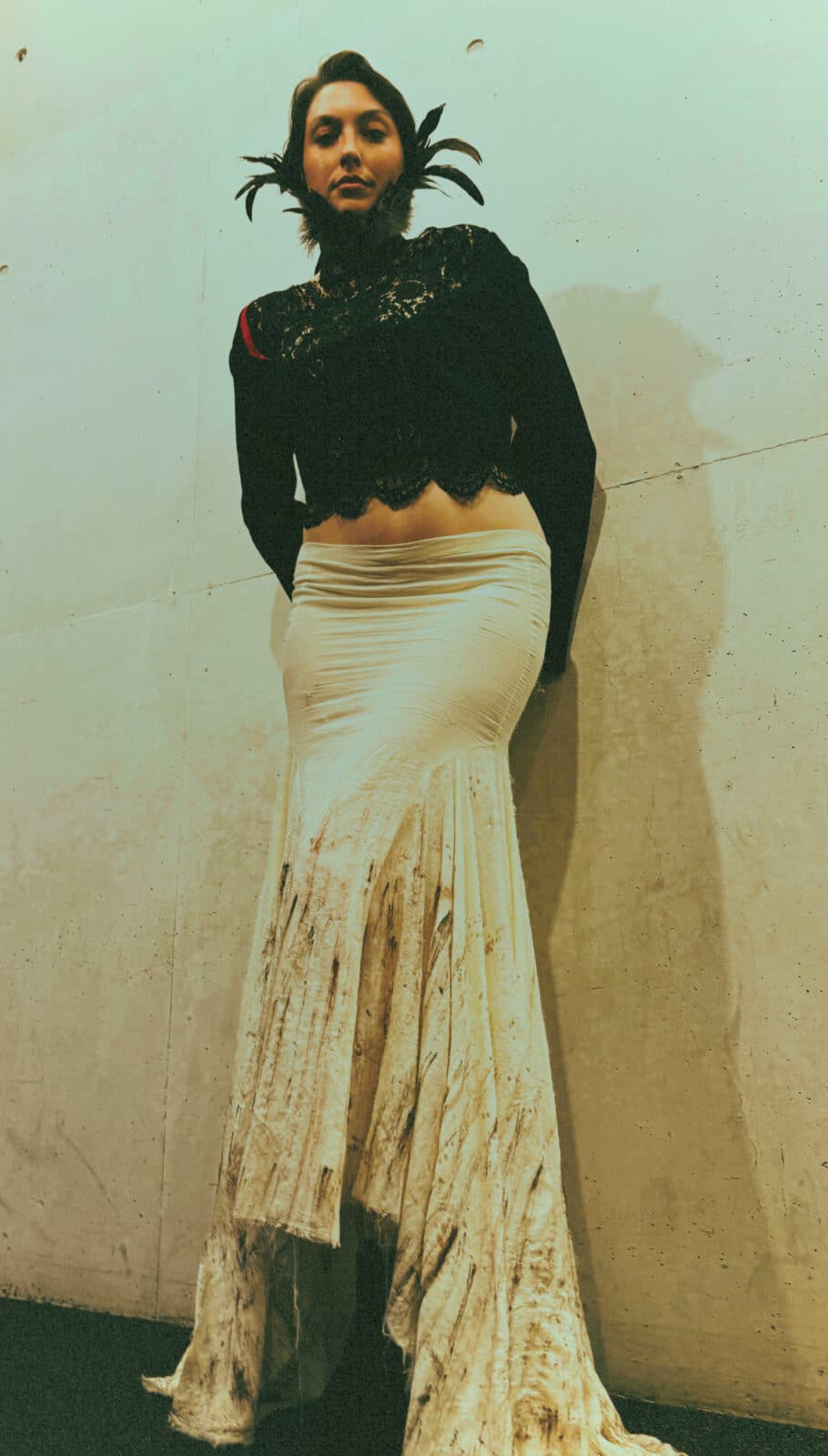
Rural Irish terrain is rough, muddy and wet. As these women are returning from Ring Forts, it is expected that their clothing would be soiled, torn, and stained. To achieve this I used a steel brush to distress the ends of the silk skirt. I then dry brushed brown acrylic paint and splattered water onto the fabric. Peacock and black crow feathers were believed to be messengers from the otherworld and were seen as an omen of death, bad luck and would invite a supernatural presence into a household. Inspired by Oscar Wilde and the Dandy aesthetic of the 19th Century, the feather collar connects these historical references to create a gothic silhouette. The melton wool jacket is lined with wine red satin charmeuse. During rural 19th Century Ireland, wearing red served as a protective charm against malevolent spirits and was a common colour of women’s petticoats.
Fágálach
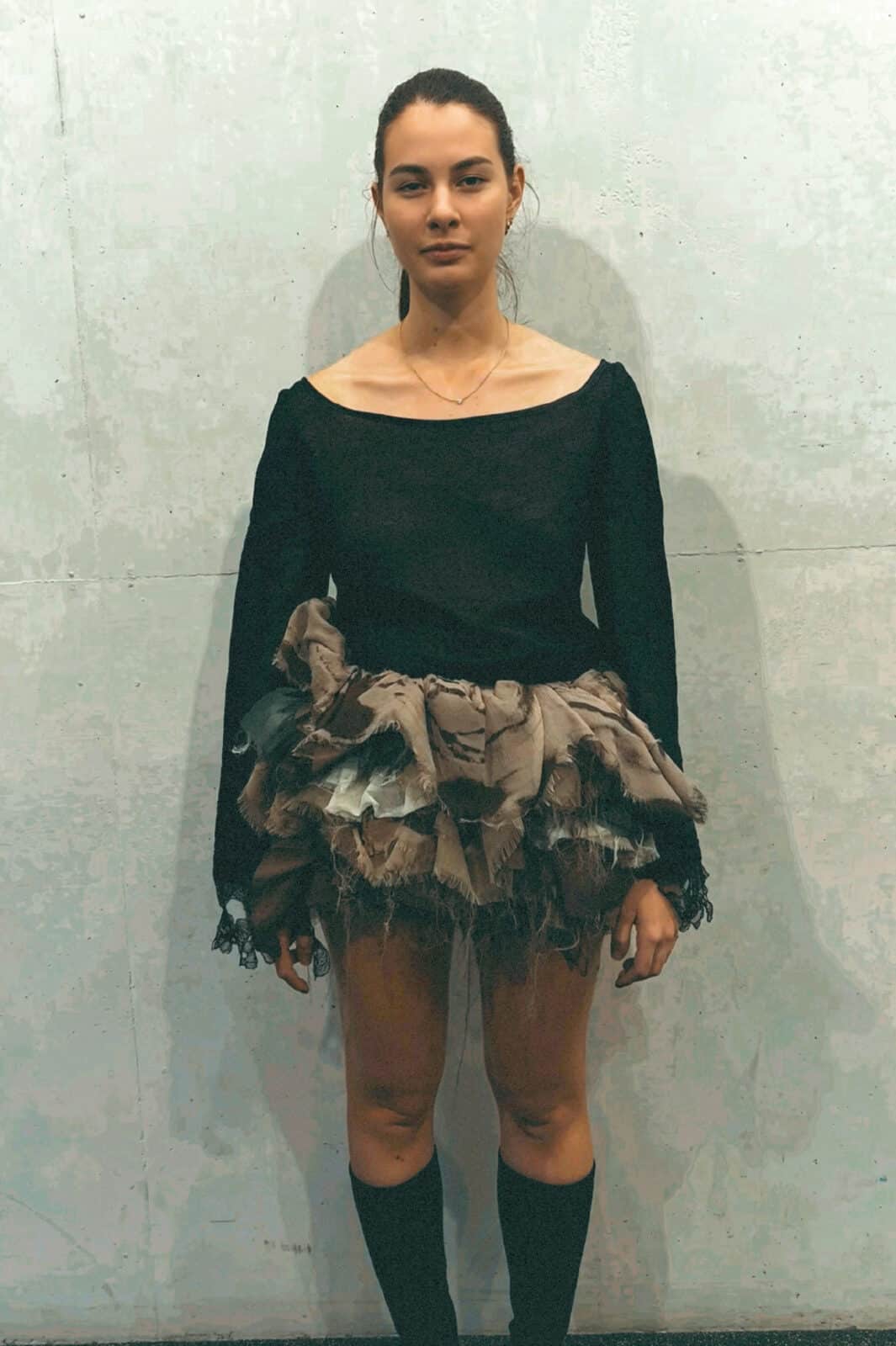
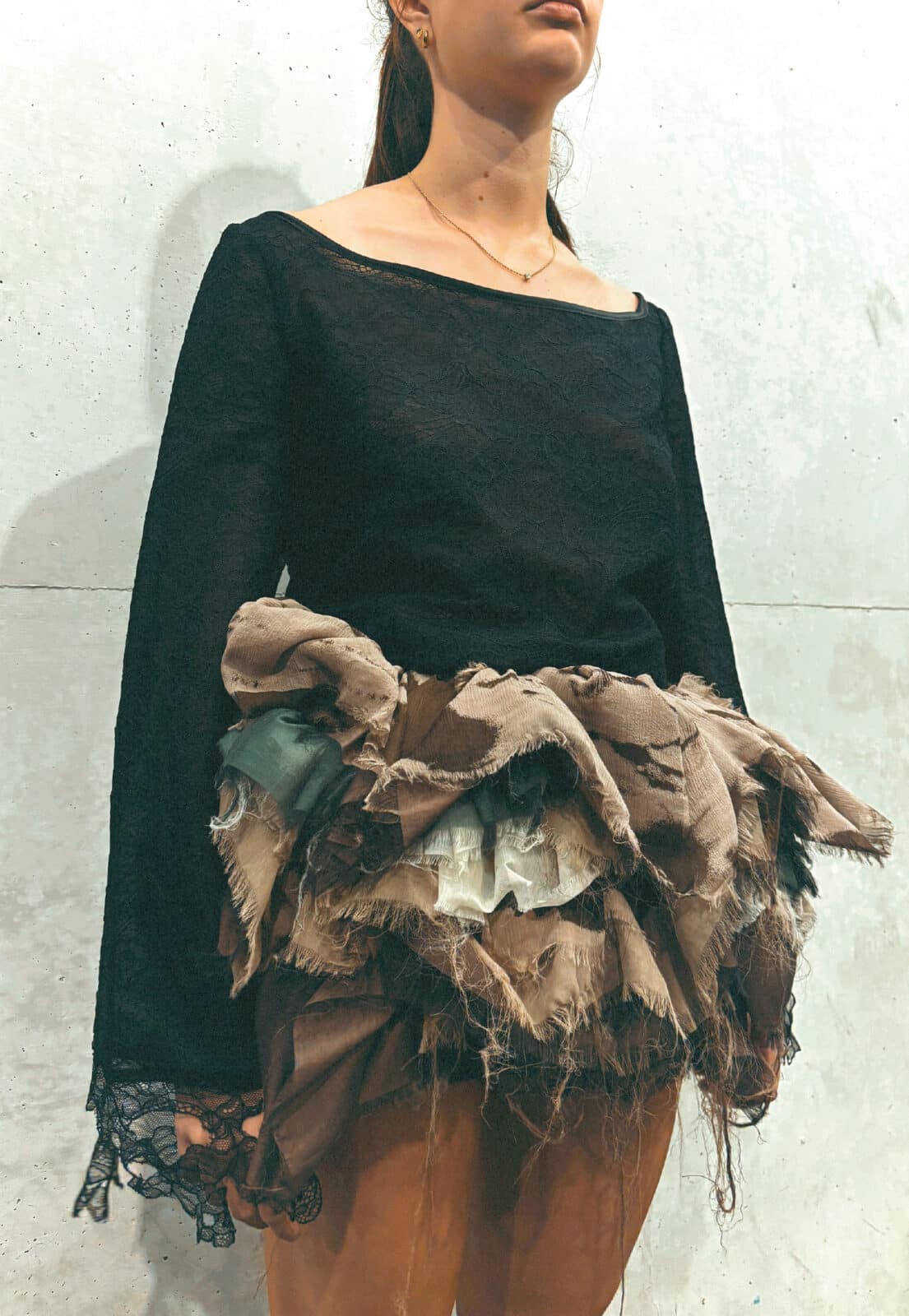
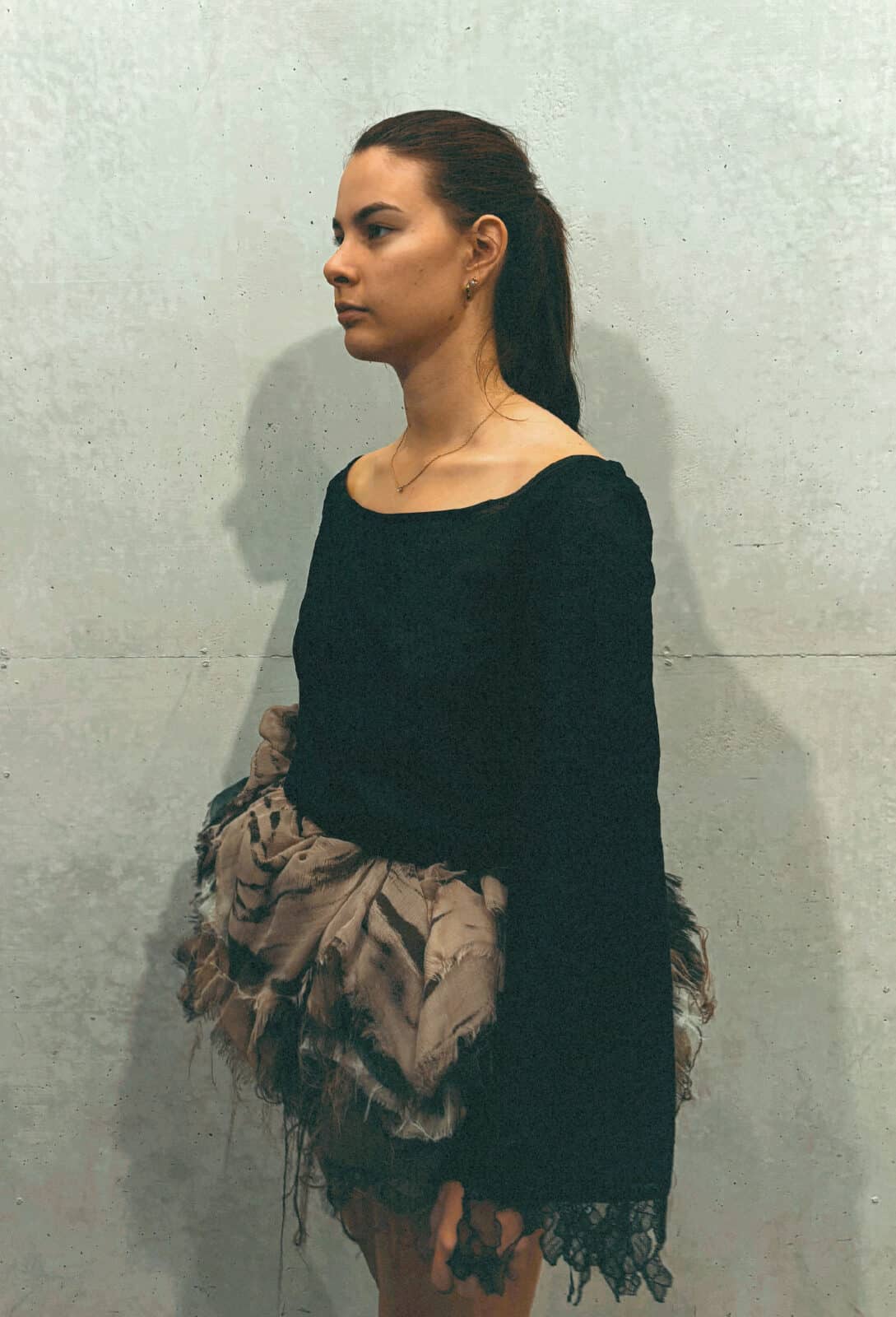
I wanted the skirt to appear tattered as though she has been caught on bushes and bramble. Using a combination of brown, green and cream organdy, chiffon and silk, the edges were frayed to allow the threads dangle and knot. Black lace was handsewn onto the cuffs of the lace top to further communicate that the fabric is starting to unravel.
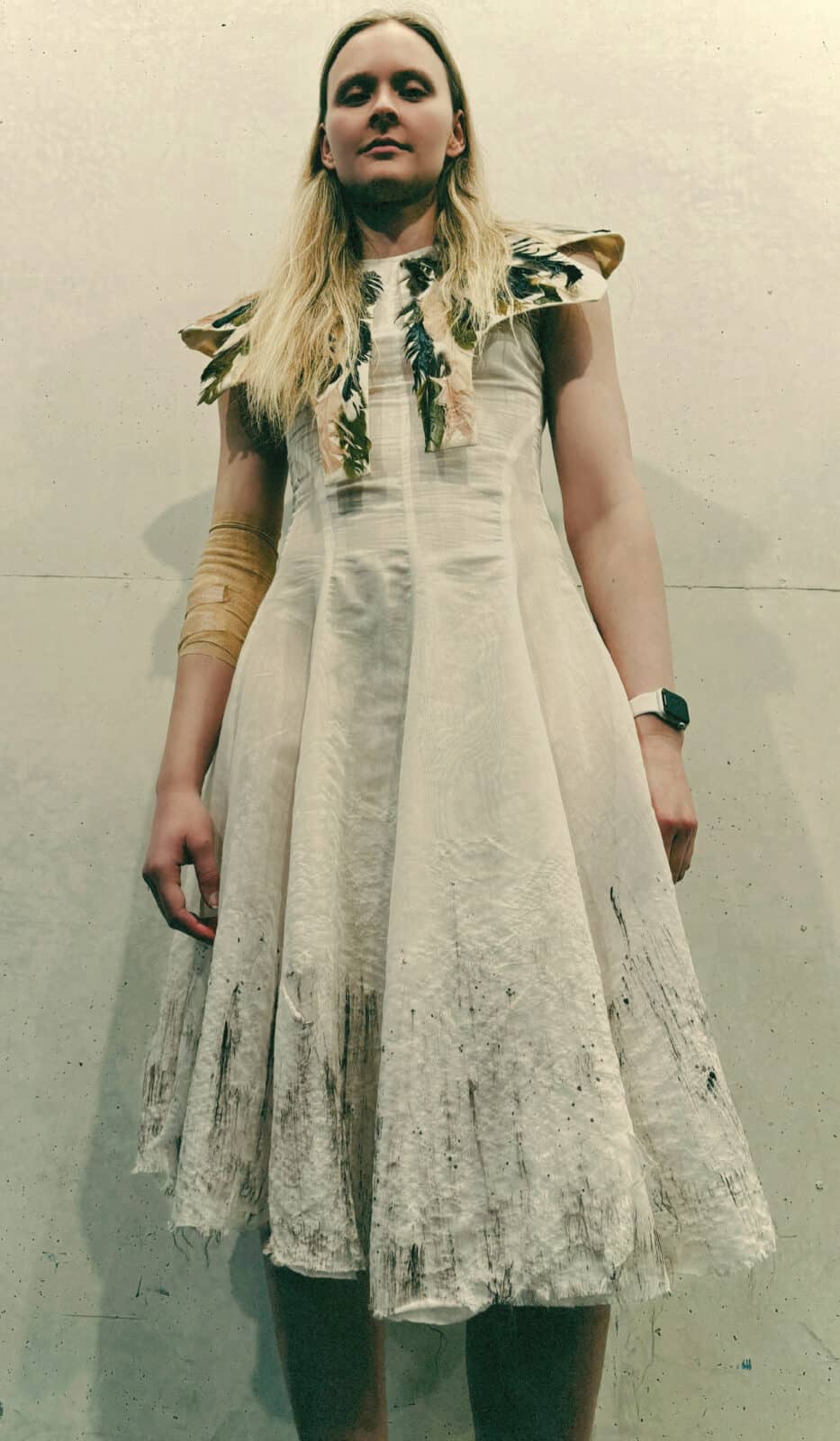
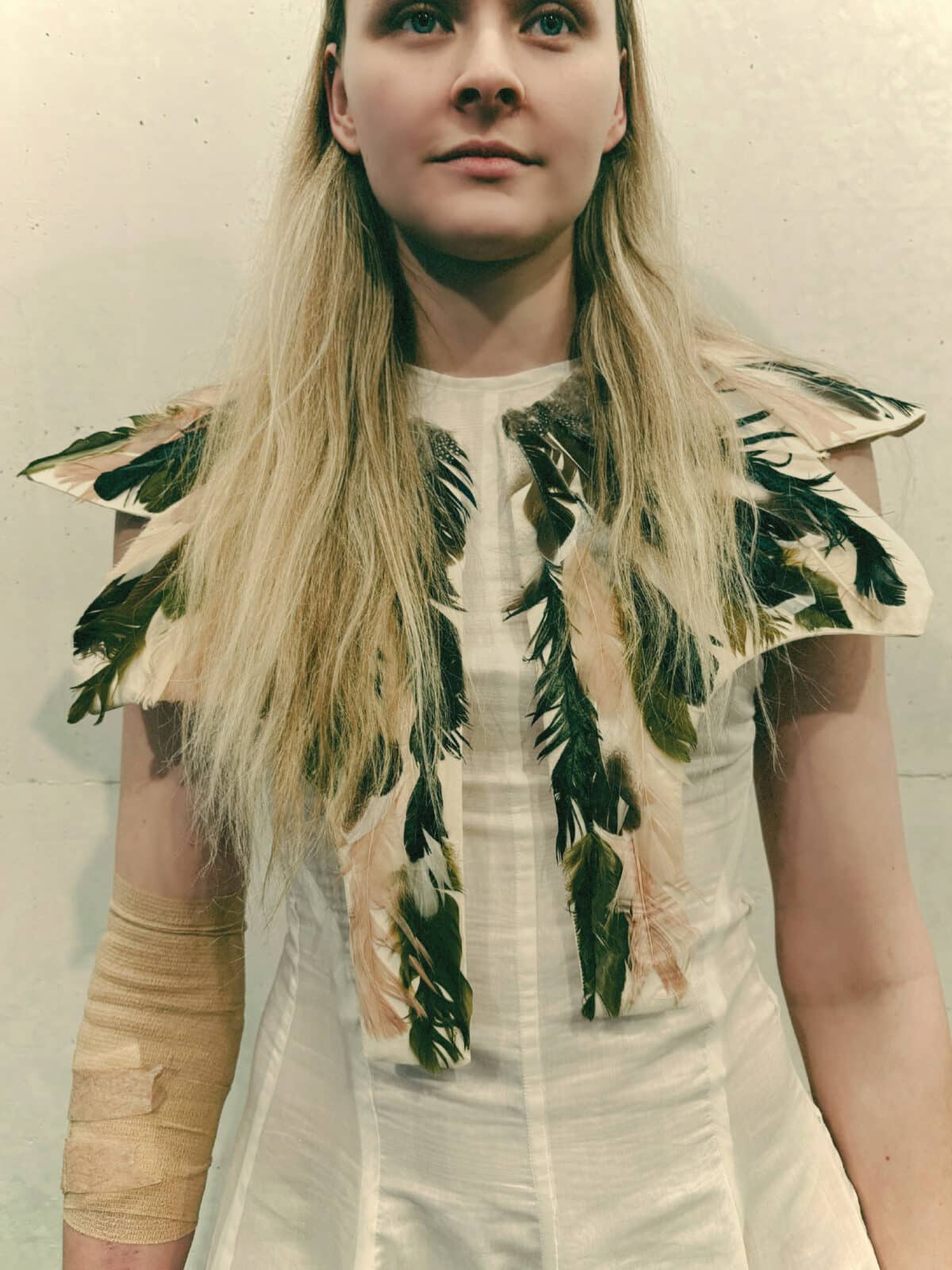
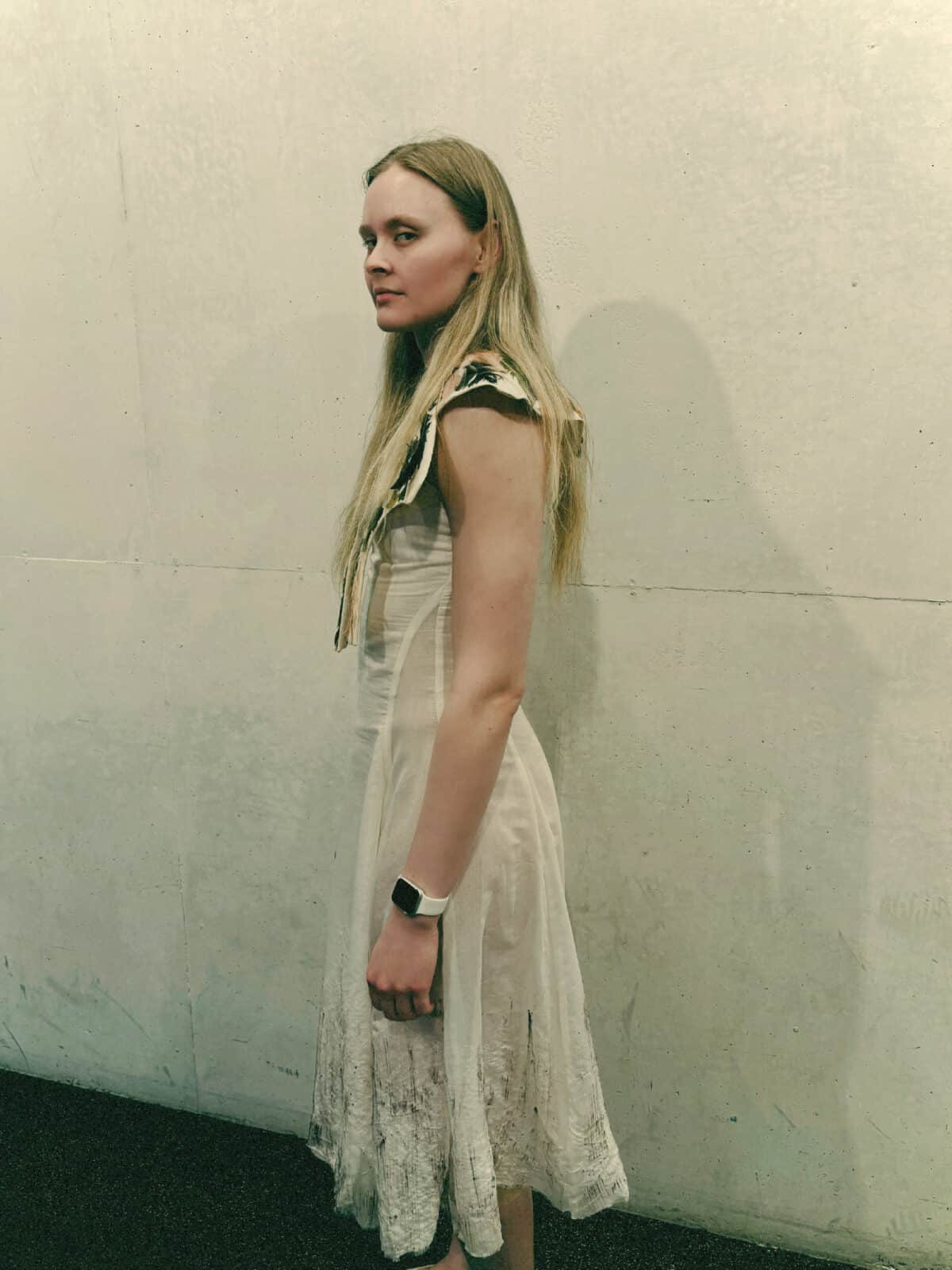
Iarlais
Inspired by a traditional 19th Century embroidered linen collar, the collar is instead adorned with Peacock and Black Crow feathers. As these women are emerging out of the harsh landscape of rural Ireland, I used a steel brush to distress the ends of the organdy dress. I then dry brushed brown acrylic paint and splattered water onto the fabric.
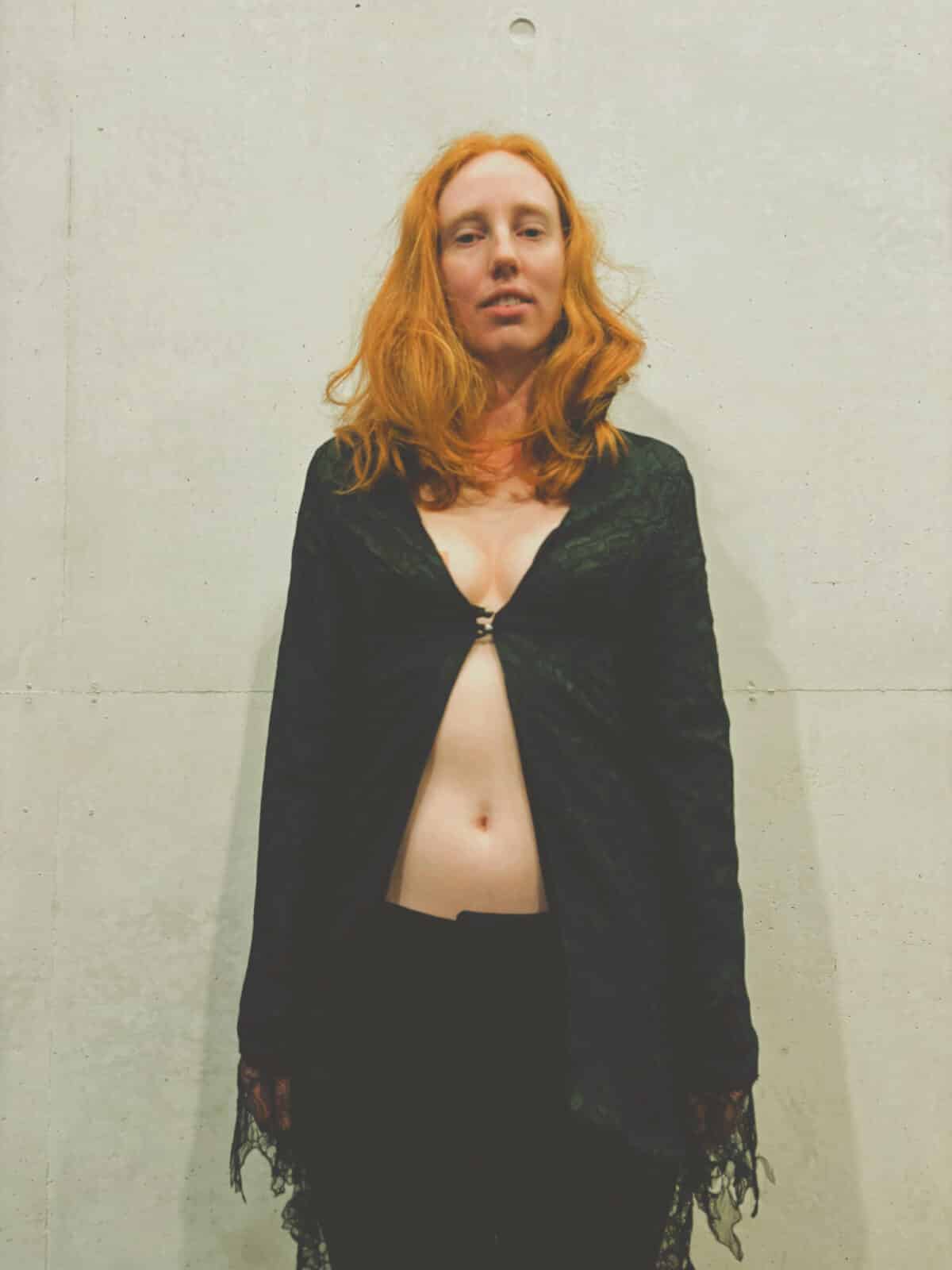
Síofra
Inspired by Oscar Wilde and the 19th Century Dandy aesthetic, a stiff high collar was incorporated into this silhouette. The bodice consists of green organdy, black lace and a black cotton suiting lining. Black lace was handsewn onto the cuffs and hem to further communicate that the garment is slowly starting to fall apart. The low waisted cotton pants are flared at the bottom, with pin tuck stitching up the front of the leg, connecting the lines created within the organdy dress and silk skirt.