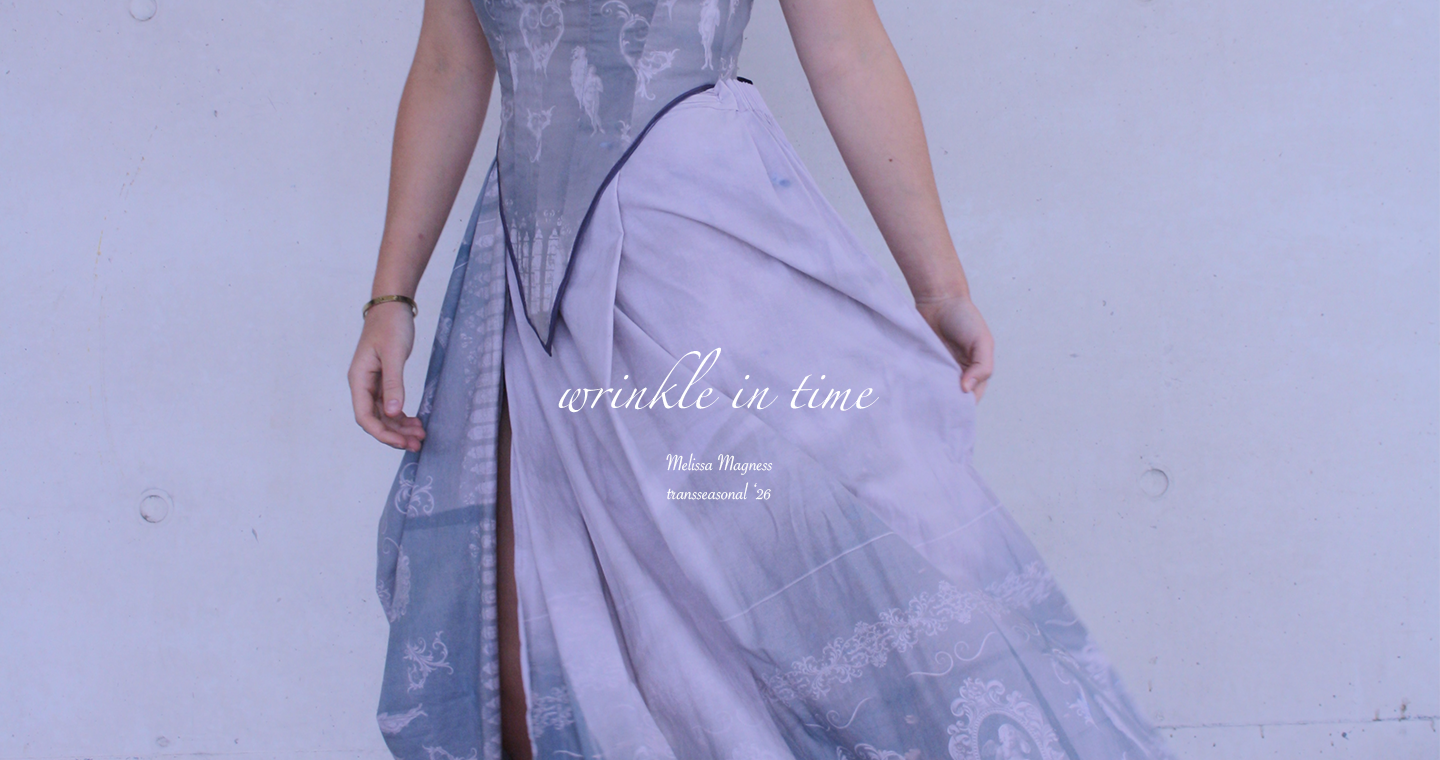
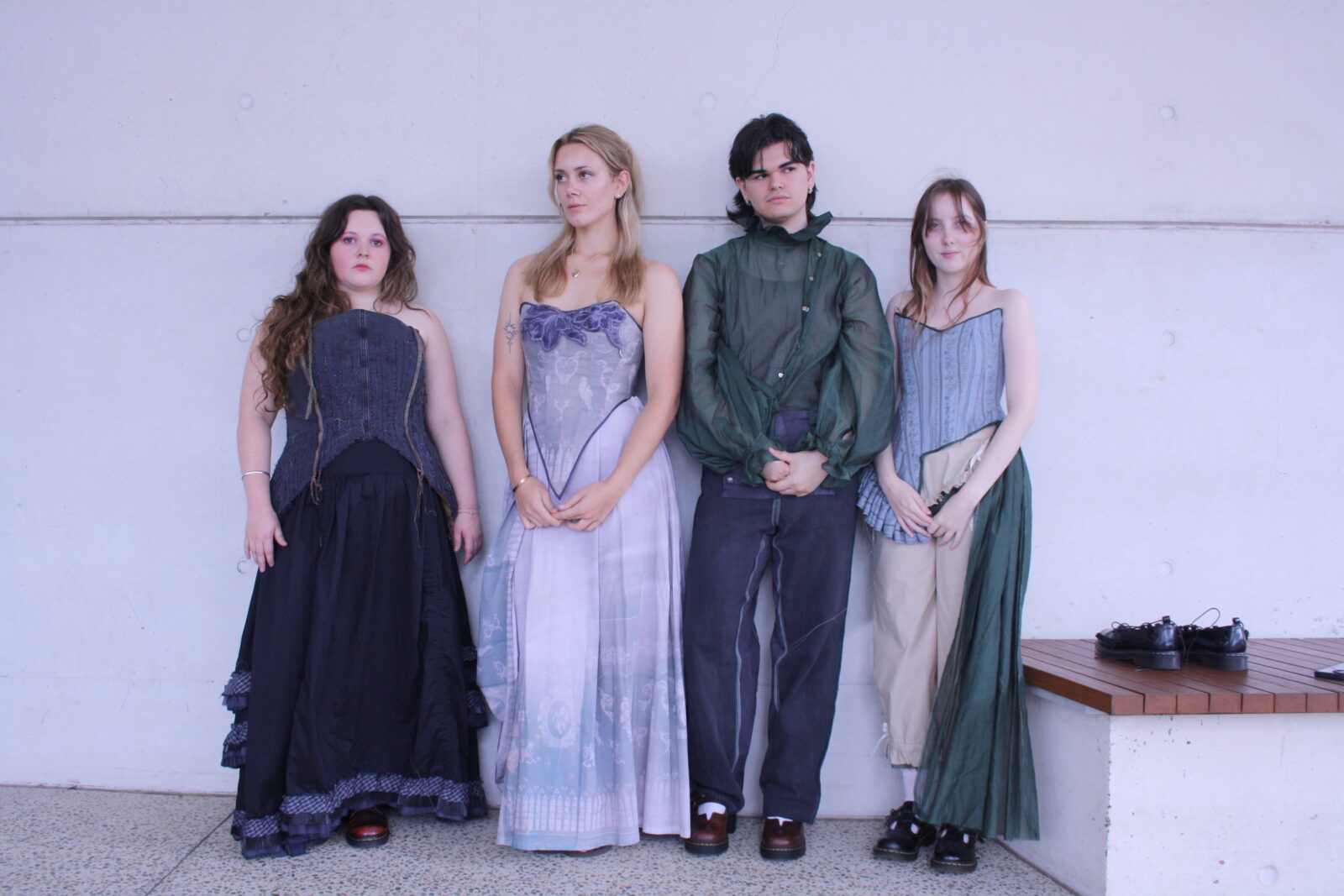
A temporal fracture of entropy, this collection is a visual realisation of accidental chronotraversal. Silhouettes display the intersection of modern history with the contemporary, as traditional or familiar shapes are sliced and warped on the wearer as they tesser through time.
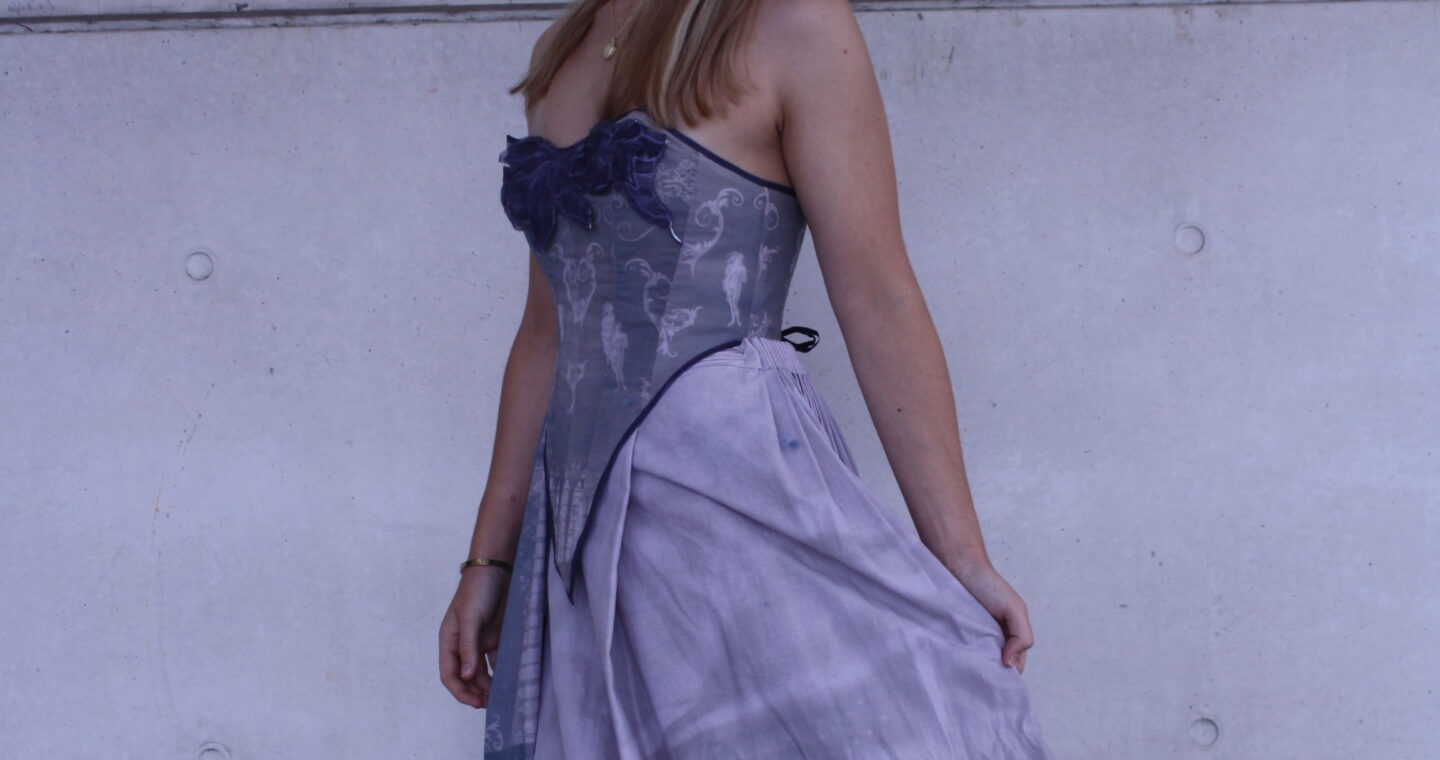
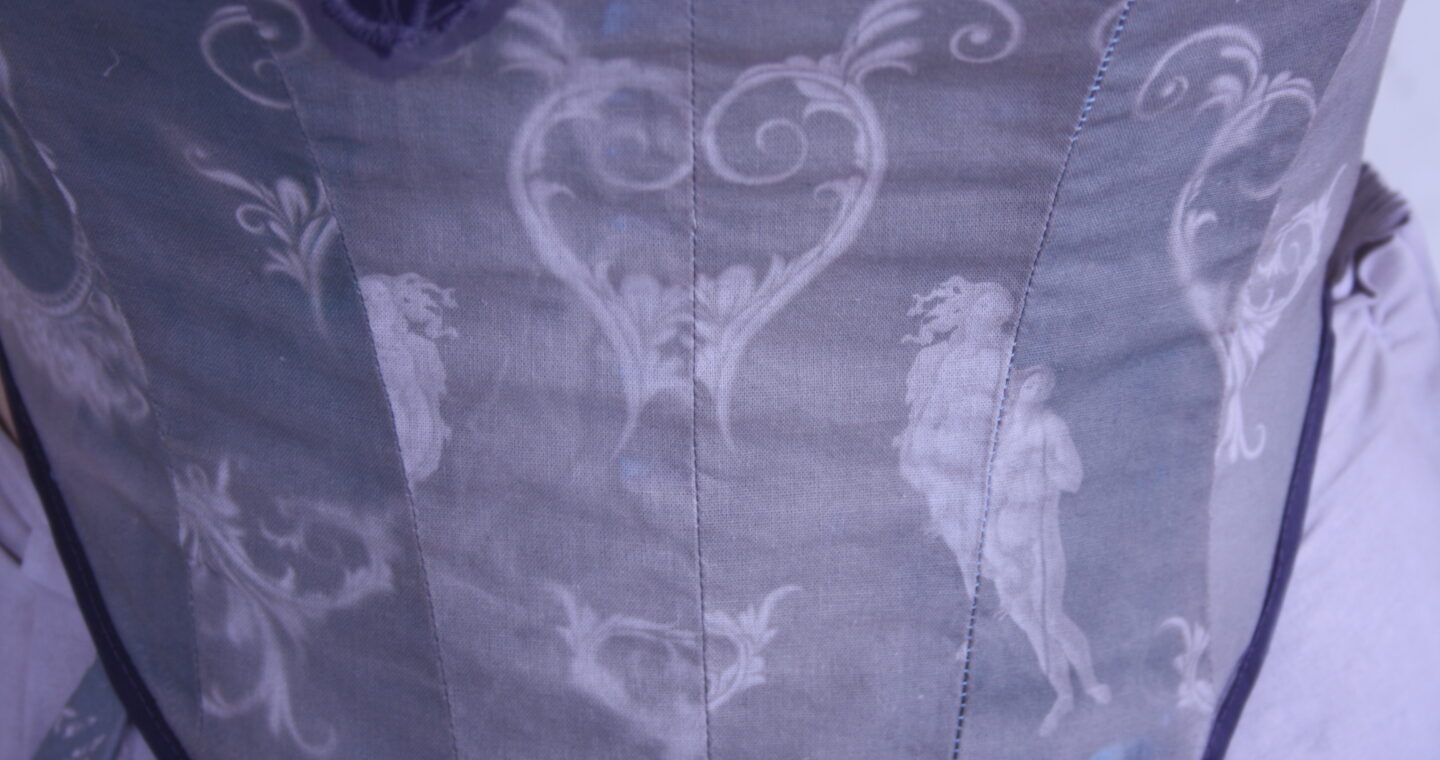
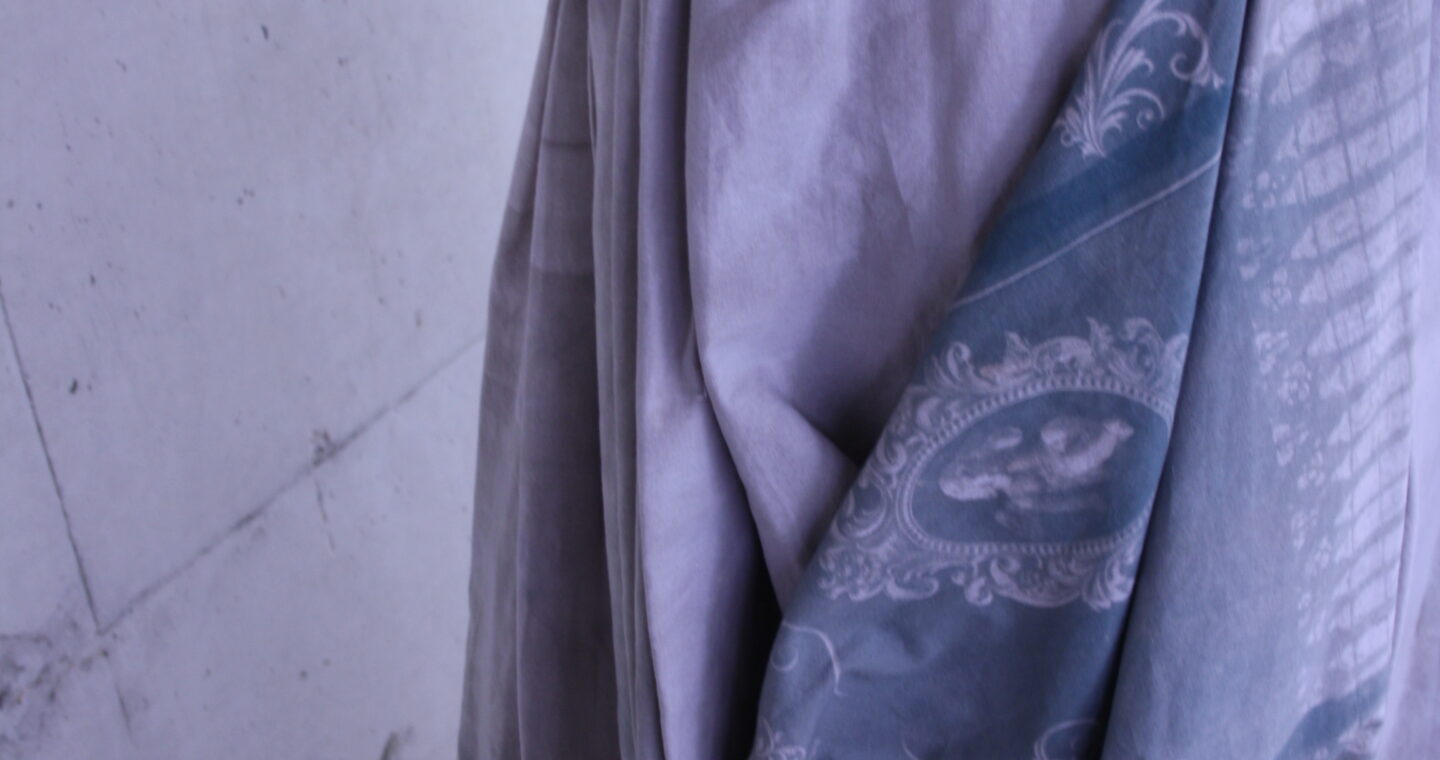
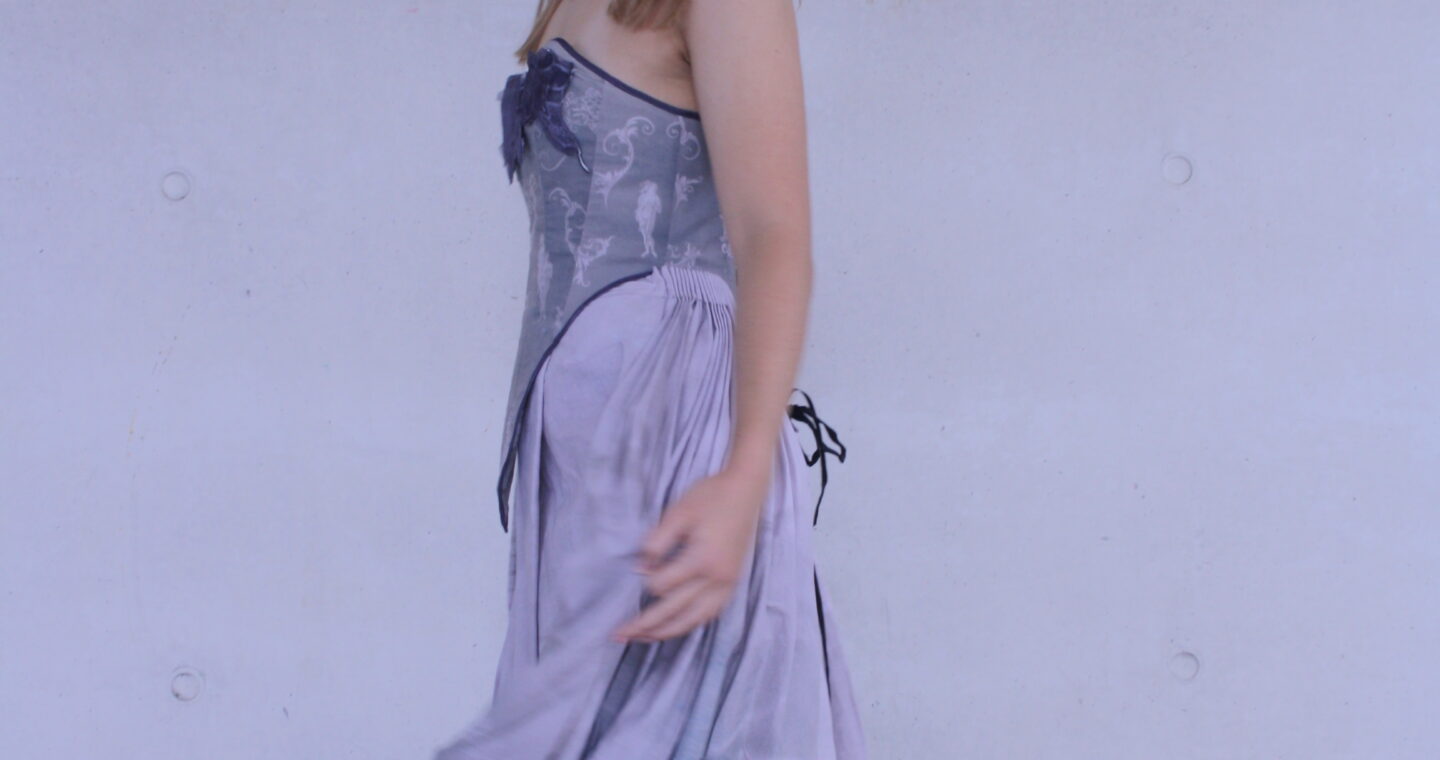
The shift from labyrinthine decoration to minimalism is palpable, as ornate art, architecture, and fashion continually become lost to time. Revisiting French Gothic architecture reveals a level of intricacy missing from present structures. Cherub baby statues, carved acanthus leaves, gilded mirrors, and stained glass windows adorned cathedrals such as the Notre-Dame. In this silhouette, the aforementioned symbols are cyanotype printed onto cotton broadcloth, then shifted to a soft purple hue using green tea.
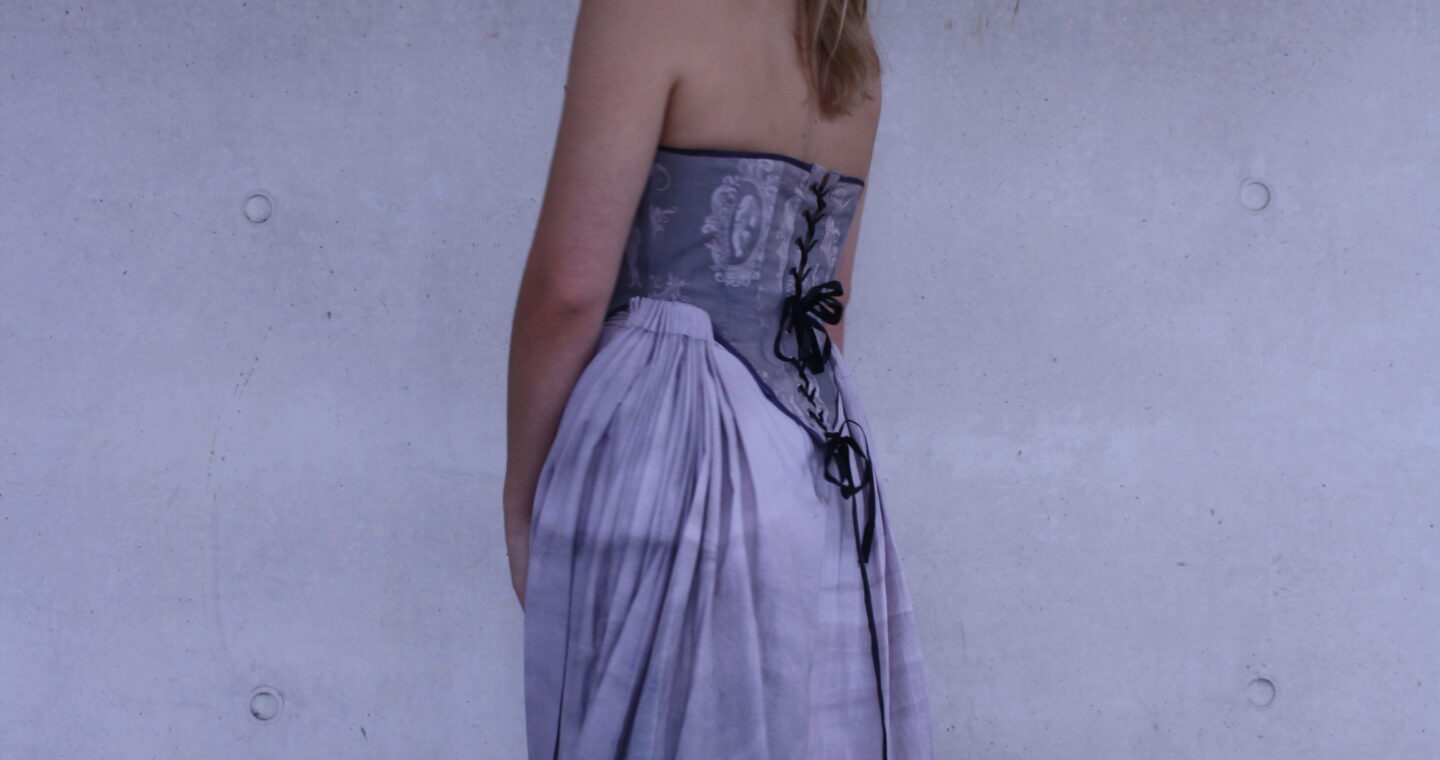
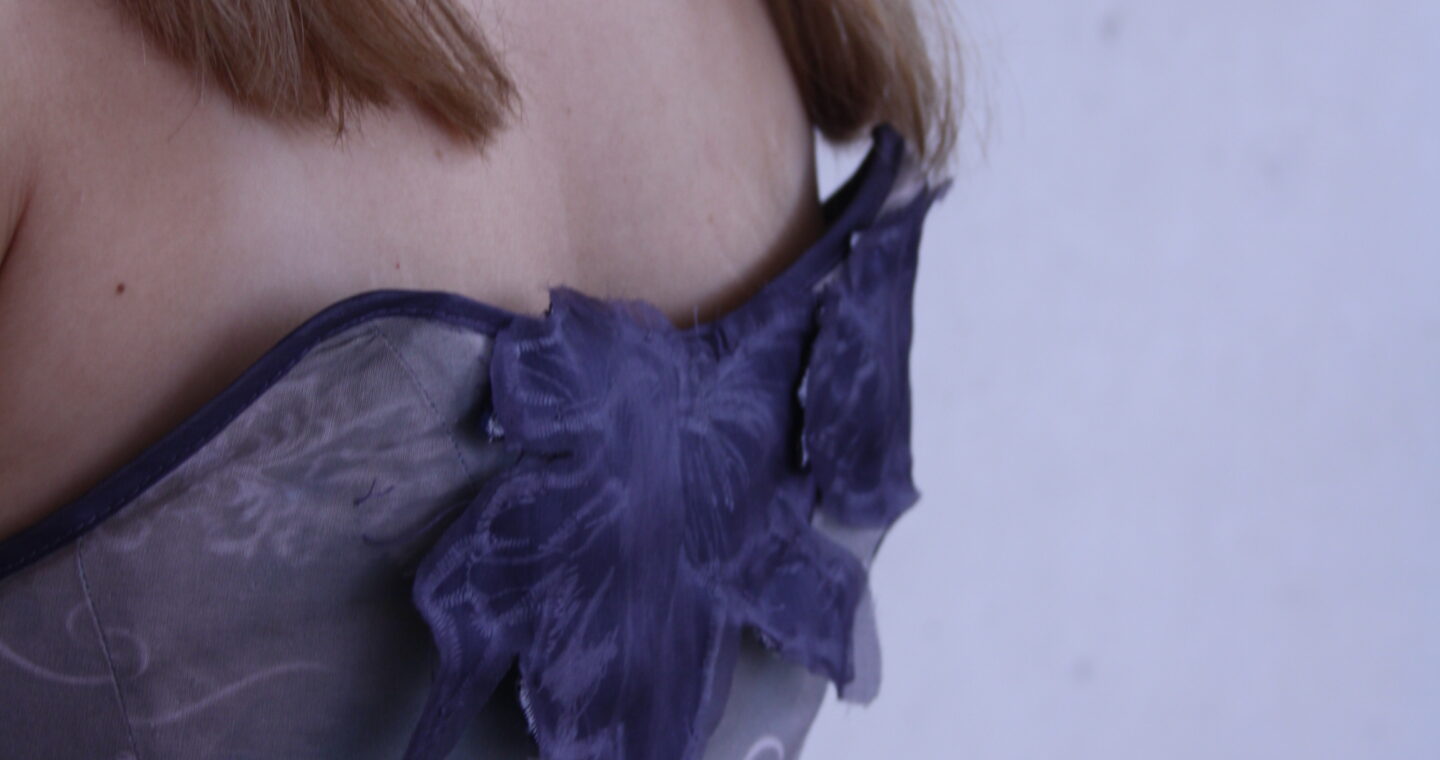
Corset construction and draping are reminiscent of the structural contrast in historical fashion. Synthetic Whaleboning and an exaggerated front peak put a contemporary spin on a Renaissance-Baroque-esque silhouette. The embroidered floral appliqué is layered with silk organza, amplifying the purple hue set by the green tea dyeing. Using the same organza for the binding visually ties the piece together, transforming the corset into a decorative cornice.
The application of cartridge pleating physically compresses fabric space into a condensed form, acting as a visual representation of folded space-time and string theory. This, in tandem with the dramatic front drape, re-establishes the silhouette into a worn artefact that has been warped during time travel.
(Excluding the 100% cotton broadcloth, all other materials used are reclaimed and deadstock from The Fabric Store)
Model: Krystal Slattery
Tesser – – ——————–
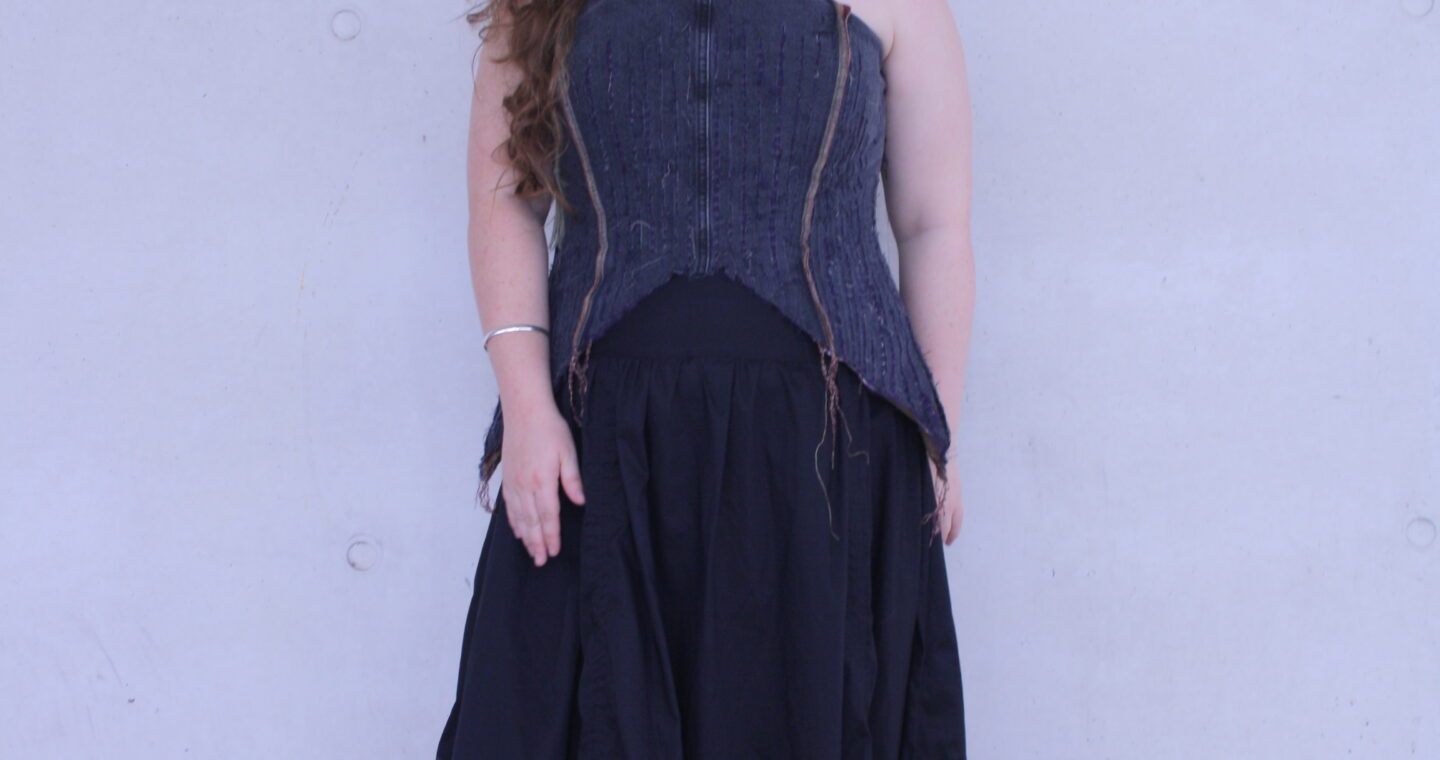
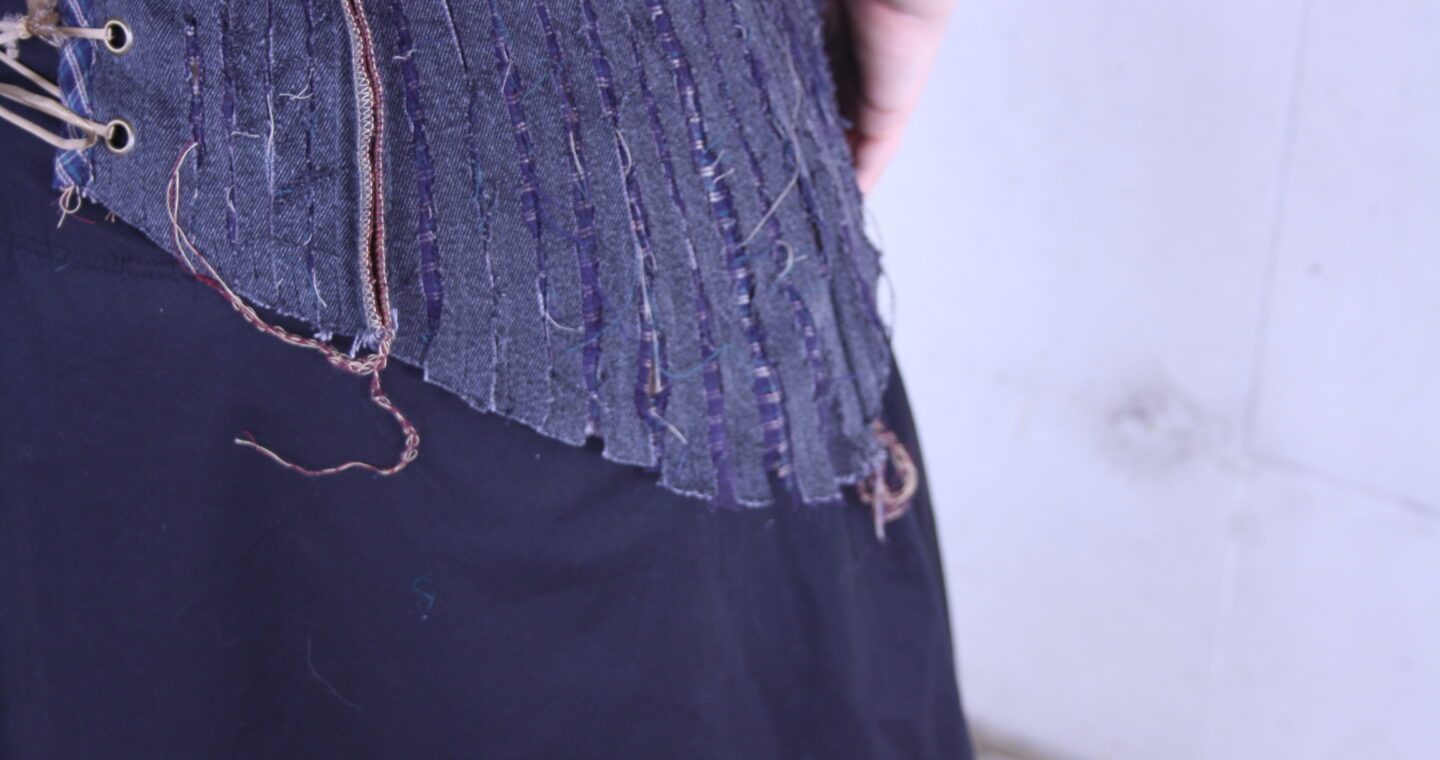
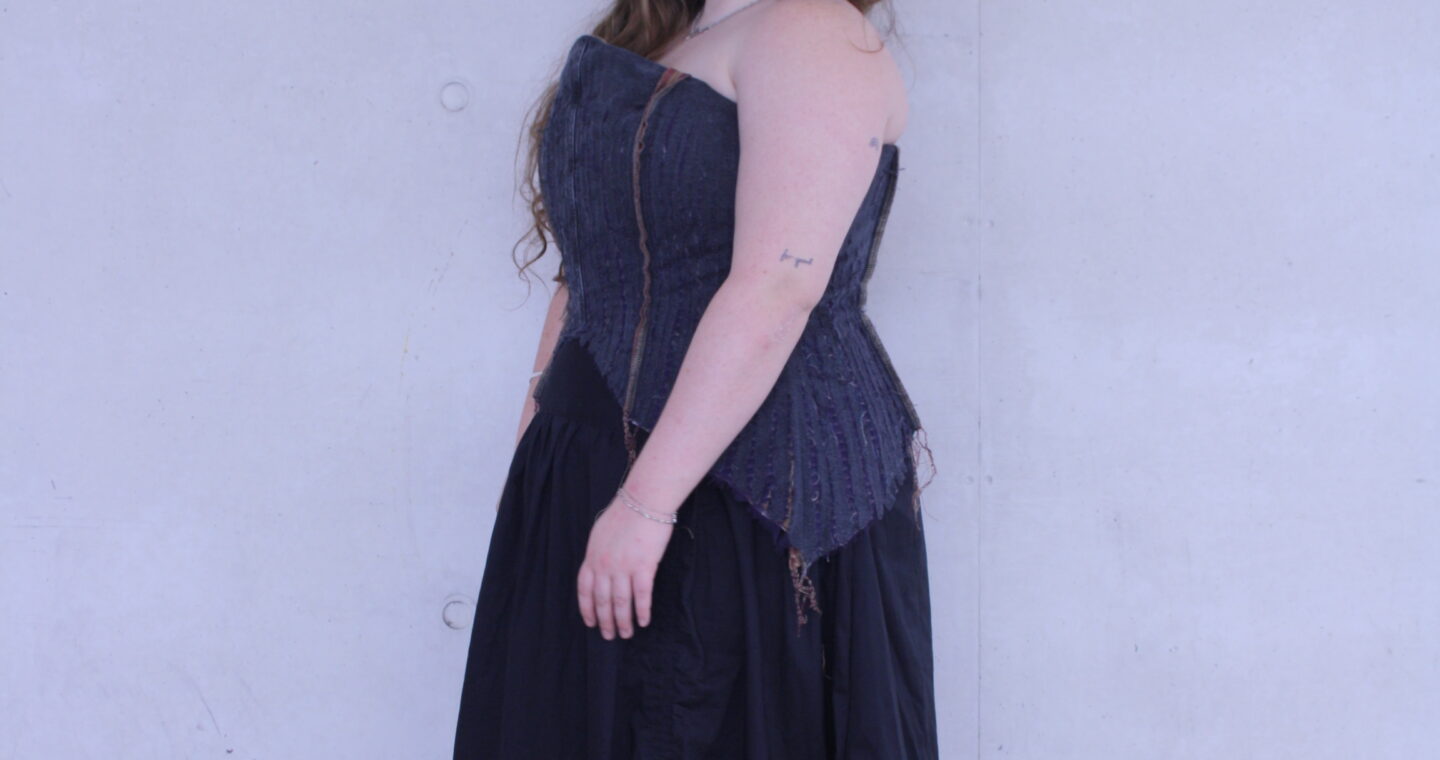
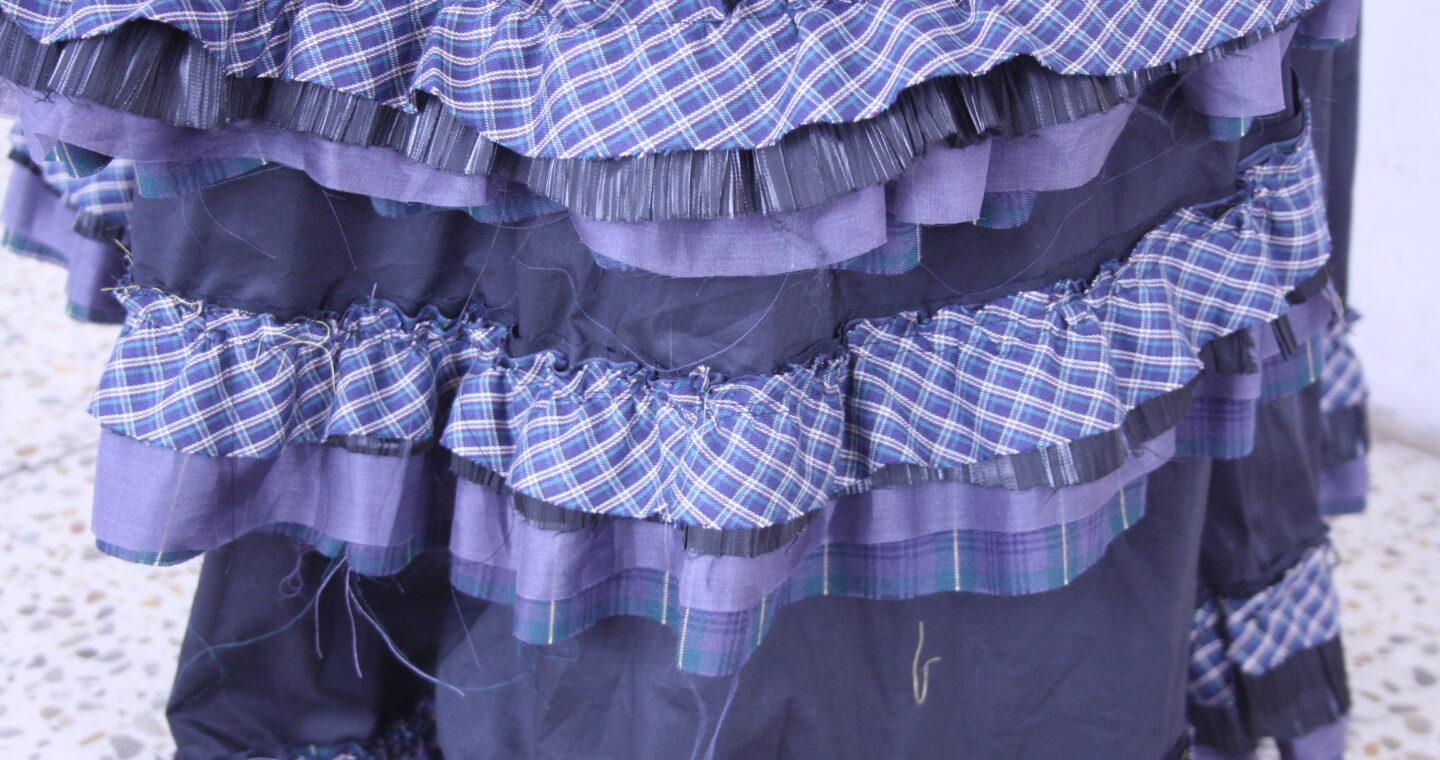
In the late 15th century, the lavish textiles worn by Western European aristocratic men were so well regarded that it became a trend to ‘slash’ the top layers of their garments as a means of showing off the elaborate layers hidden beneath. Denim serves as the equilibrium in this silhouette, bridging historical textiles to contemporary ones. As the top layer, it is the most ‘recent’ relative to us in fashion history. The underneath layers of chiffon, plaid, and plain cotton respectively depict time flowing backwards.
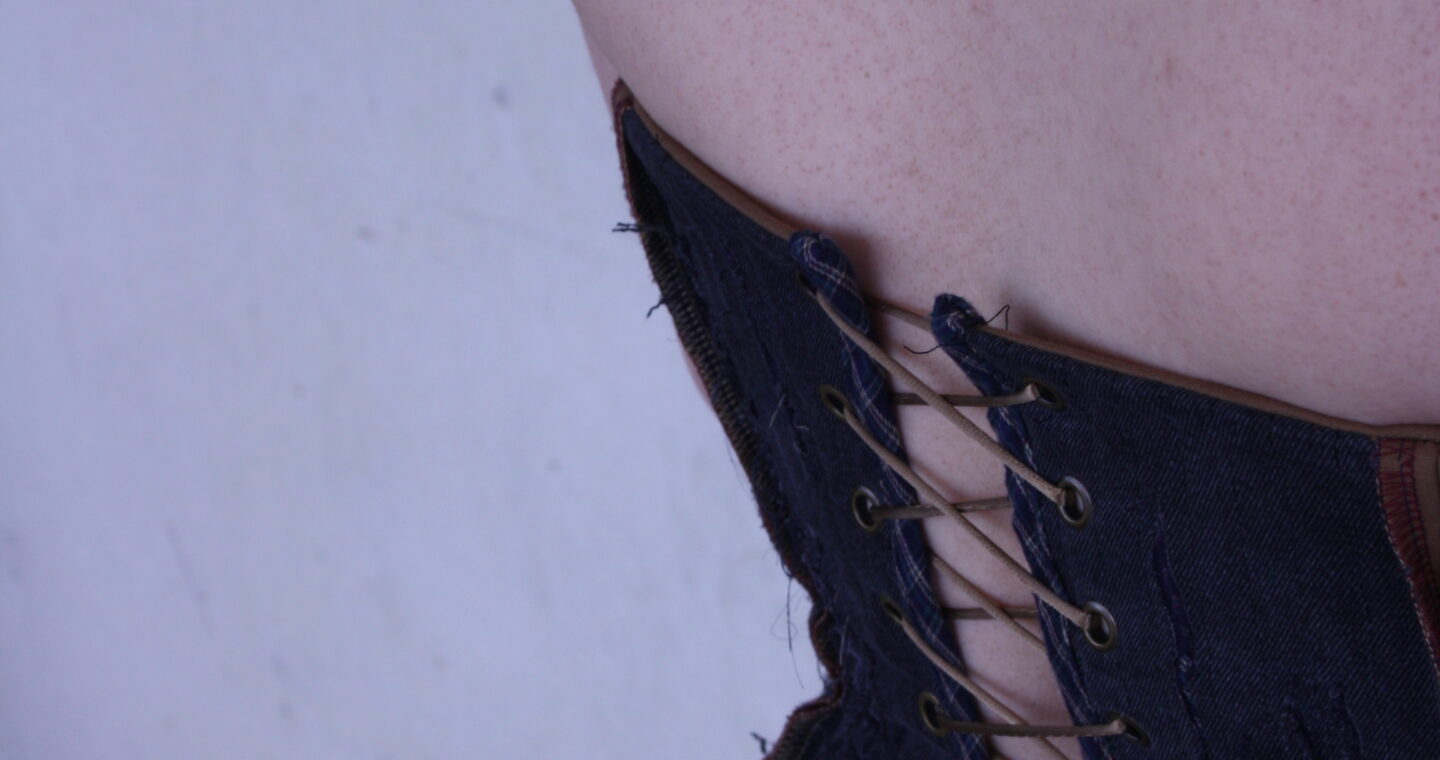
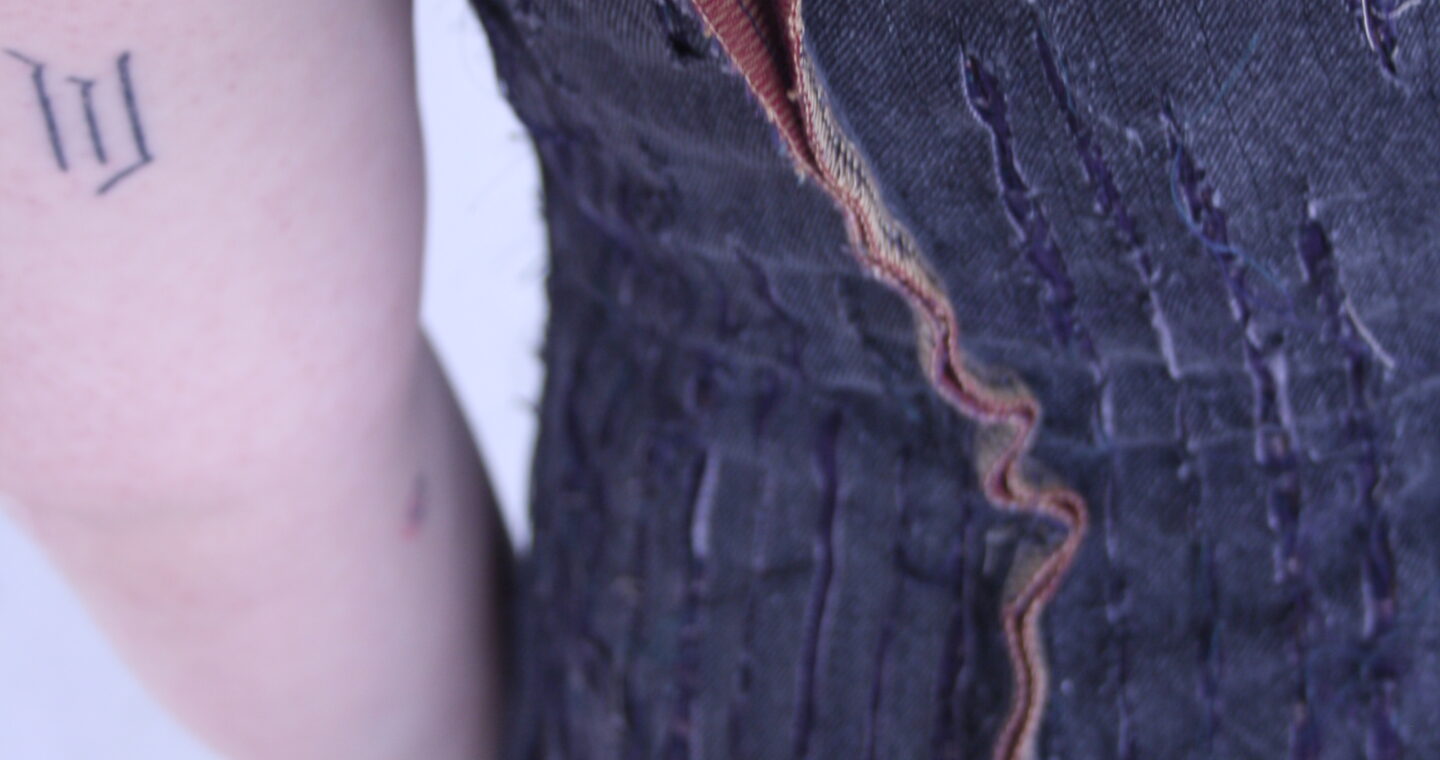
The traditional shape of the corset is also changed, with harsh triangular cuts from the hips to the centre front, and the neckline extended dramatically to a point. The denim used was from discoloured, deconstructed, old jeans. Overlocking is flipped to the exterior with contrasting colours for the looper and needle threads, which are left fraying alongside the other materials at the bottom hem of the corset. These choices were intentional, all furthering the visual storytelling in the silhouette, displaying both the deconstruction and deterioration of garments through time, as well as the unpredictable effects of time travel.
The maxi skirt also features the same layered fabrics, though instead of slashing through, they are stacked and fraying. The front features drawstrings, which can be pulled and distort the drape, though still reminiscent of Victorian dress silhouettes.
(All materials used are reclaimed deadstock from The Fabric Store and The Sewing Lair, with the exception of the denim, which is upcycled from my own torn jeans)
Model: Paige Elms
tissier —————— – – –
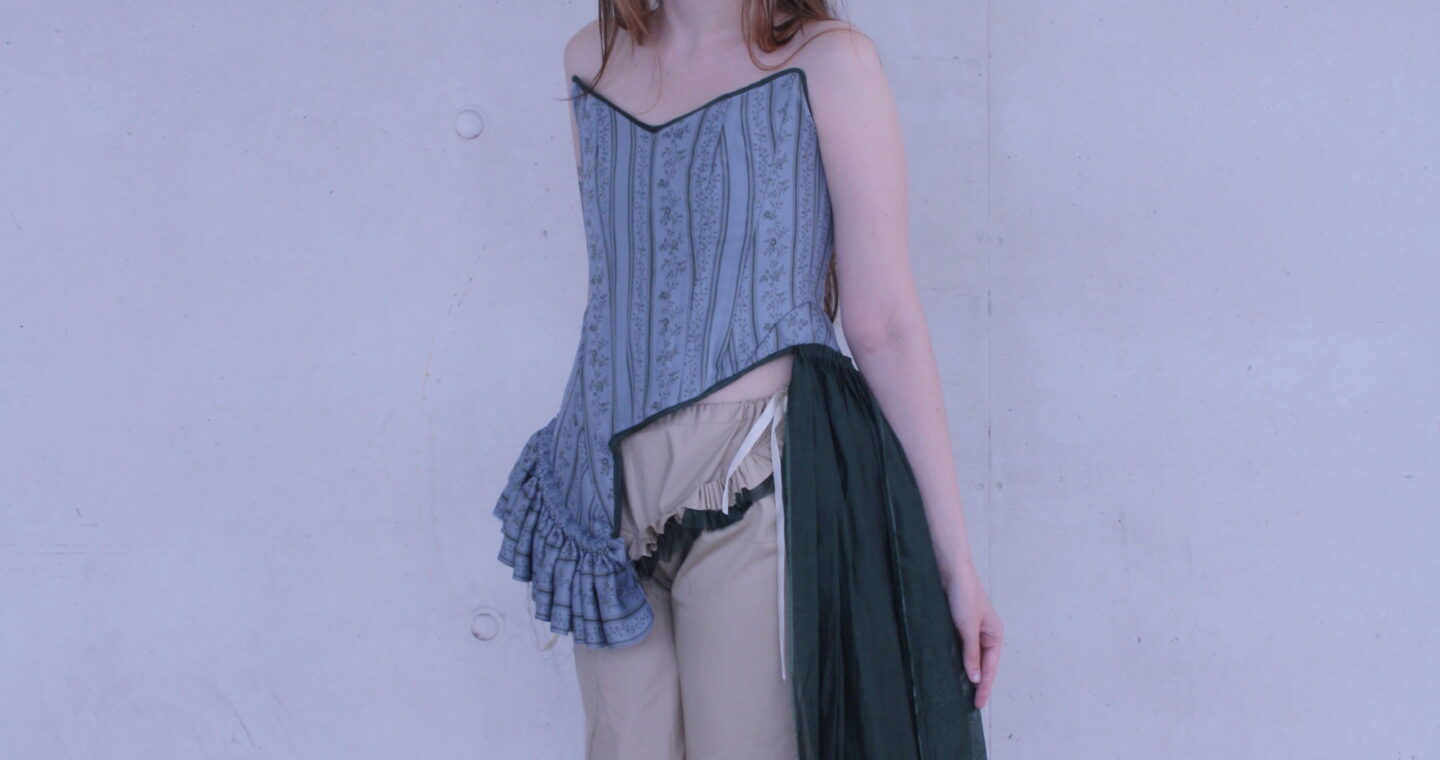
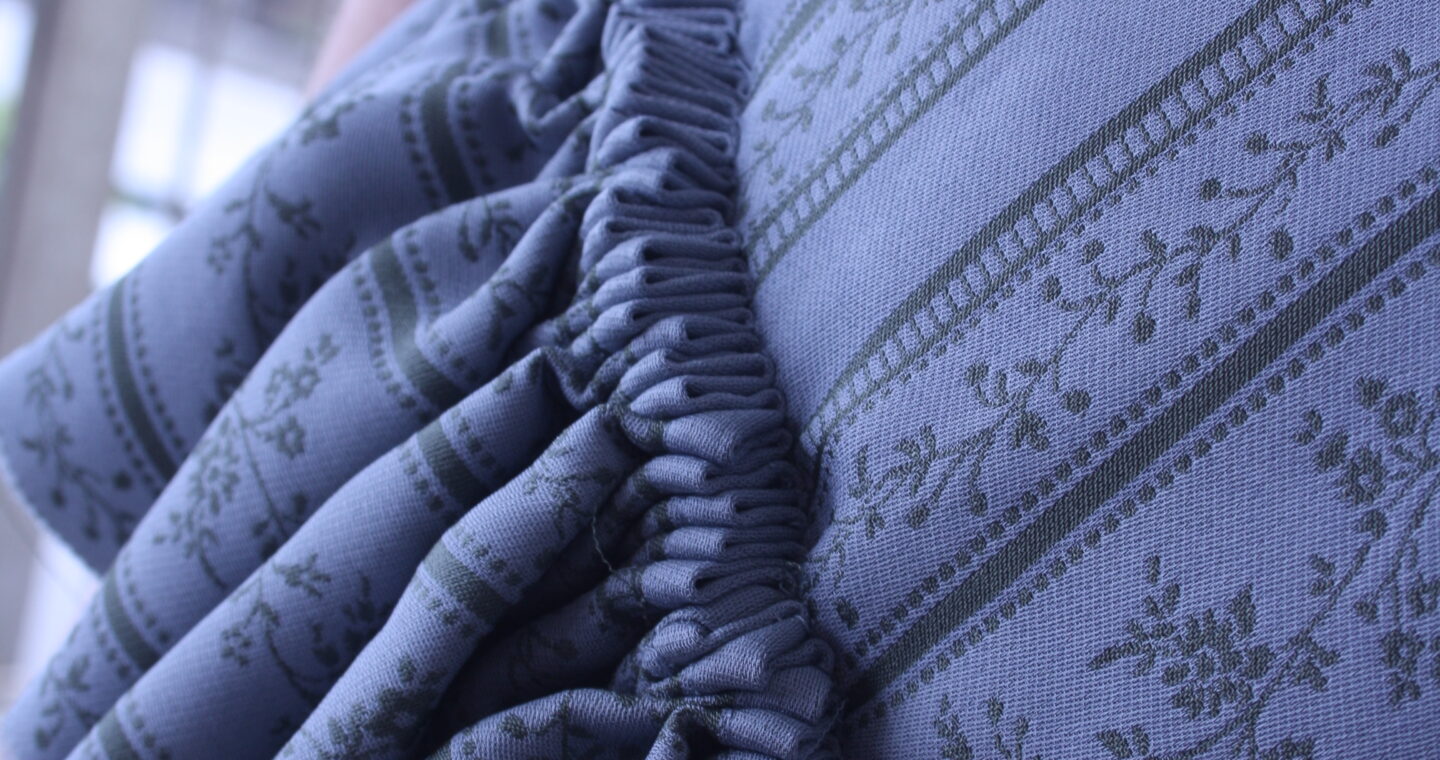
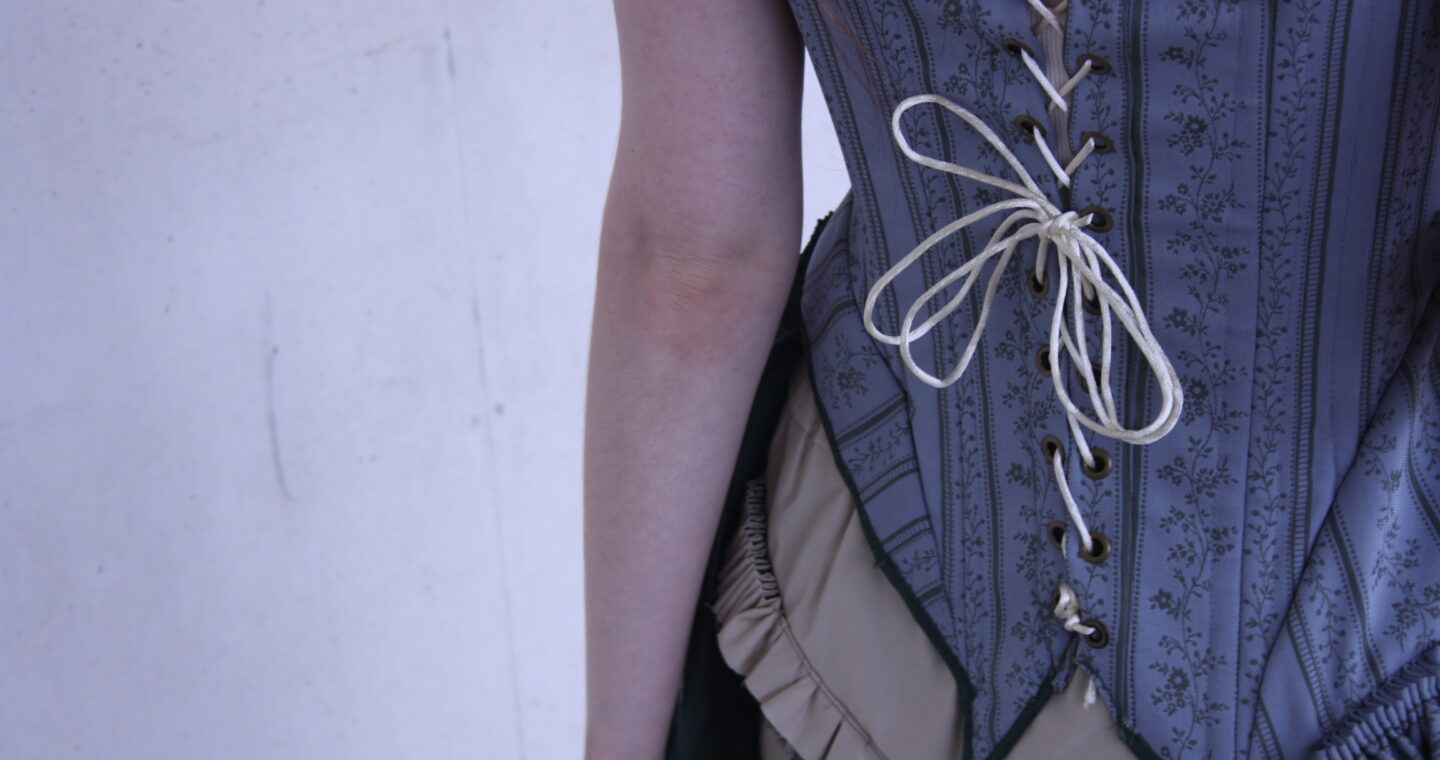
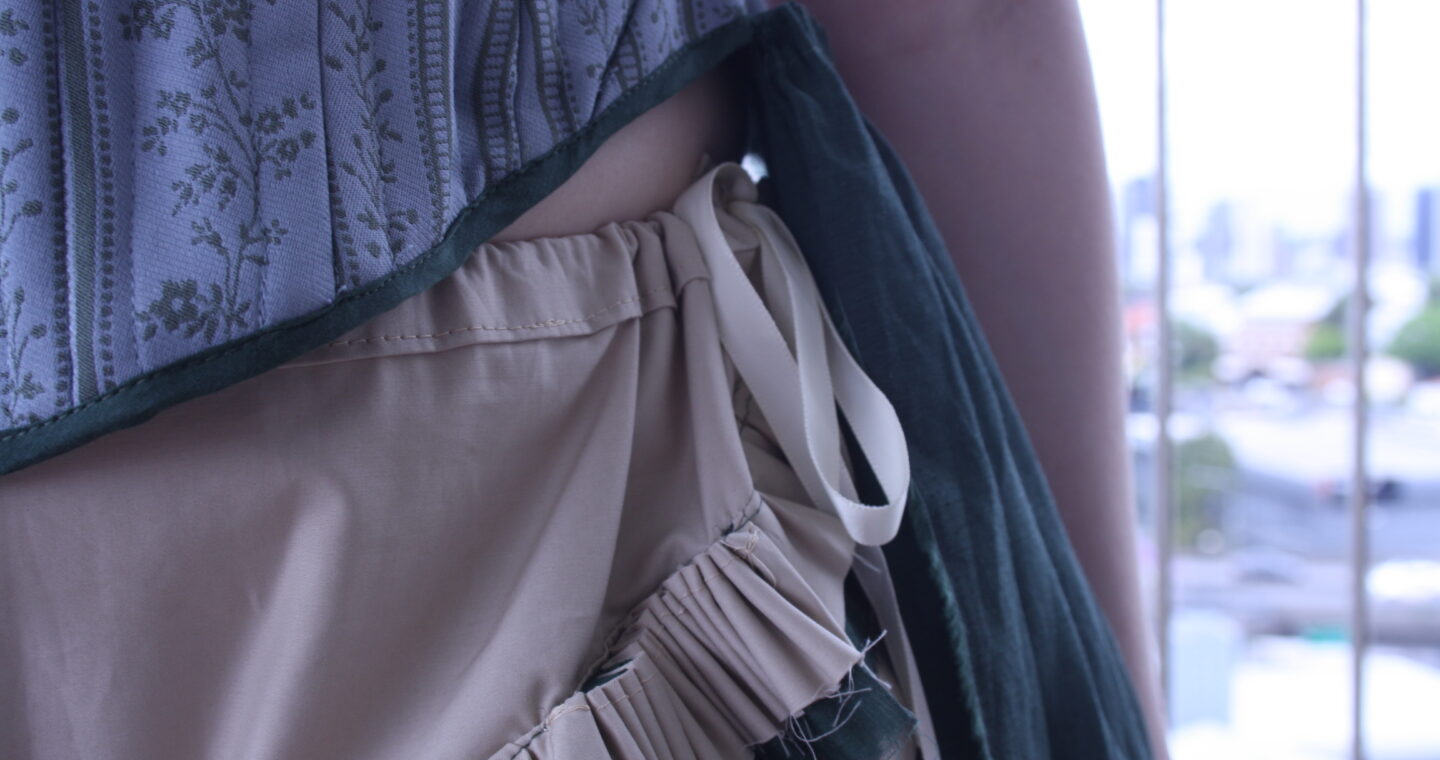
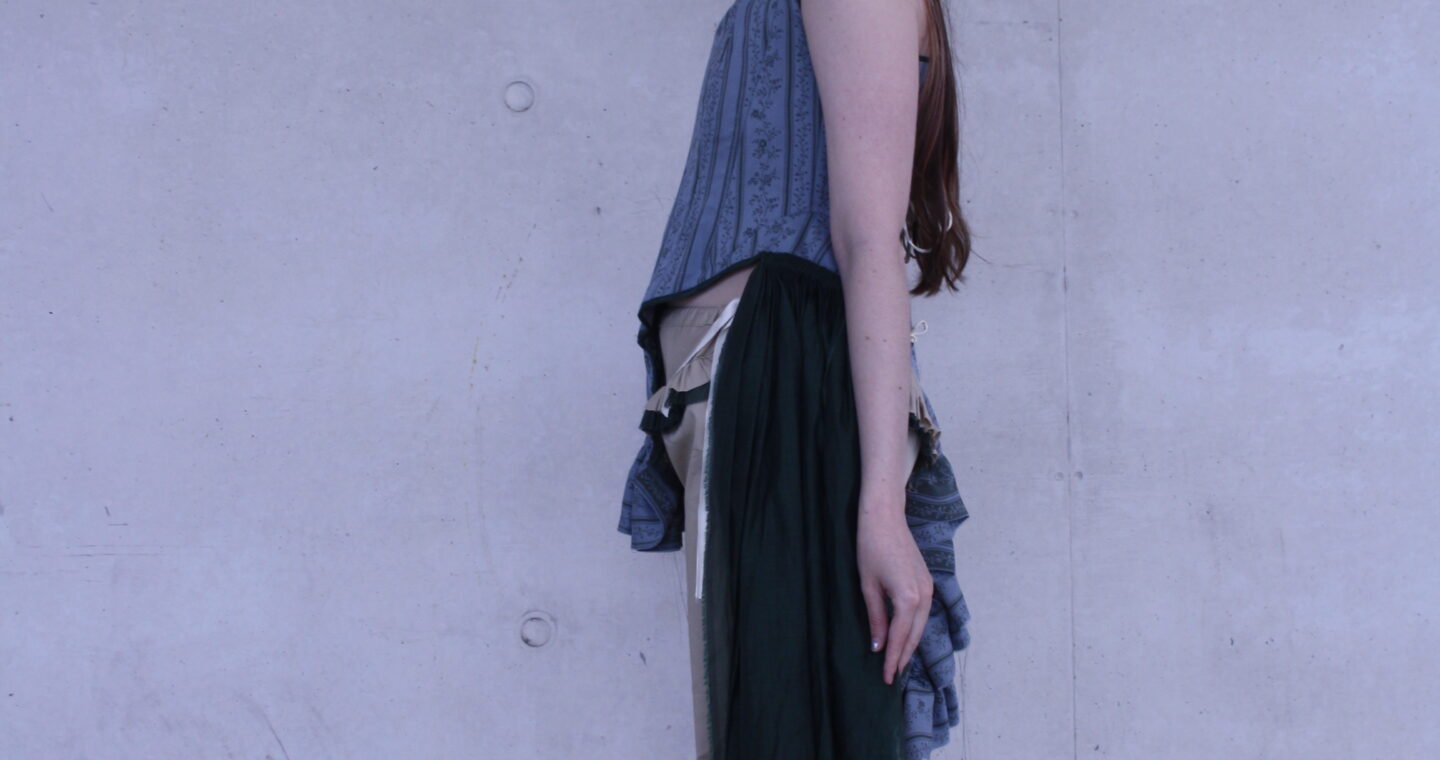
Combining cartridge pleating and slashing on a grander scale, this silhouette bridges the visual storytelling of the prior looks. Cartridge pleats are featured in three different places and in three different compositions. The organdy, jacquard, and suiting fabrics used provide physical dimension and deliberate selection across periods. The asymmetrical drape and cut of both cartridge pleated lengths are hand-basted onto the sides of the corset, hanging down over the pants. These aspects, applied together, give the effect of multiple silhouettes that have been worn layered, but cut through nearly completely, revealing the next layer underneath.
The capri-bloomers underneath continue this same story, with a two-layered gather emerging from the yoke. This gather is occasionally interrupted by a burst of cartridge pleats, as the fabric becomes space and ‘folds time,’ a visual representation of string theory in action. These gathers are repeated at the leg hems, though the cartridge pleats are replaced by a drawstring channel above. As the drawstrings are pulled taut, the effect is similar, as fabric crinkles and folds in a new way.
(All materials used are reclaimed deadstock from The Fabric Store)
Model: Iris Curry
Traverse – – – – ————-
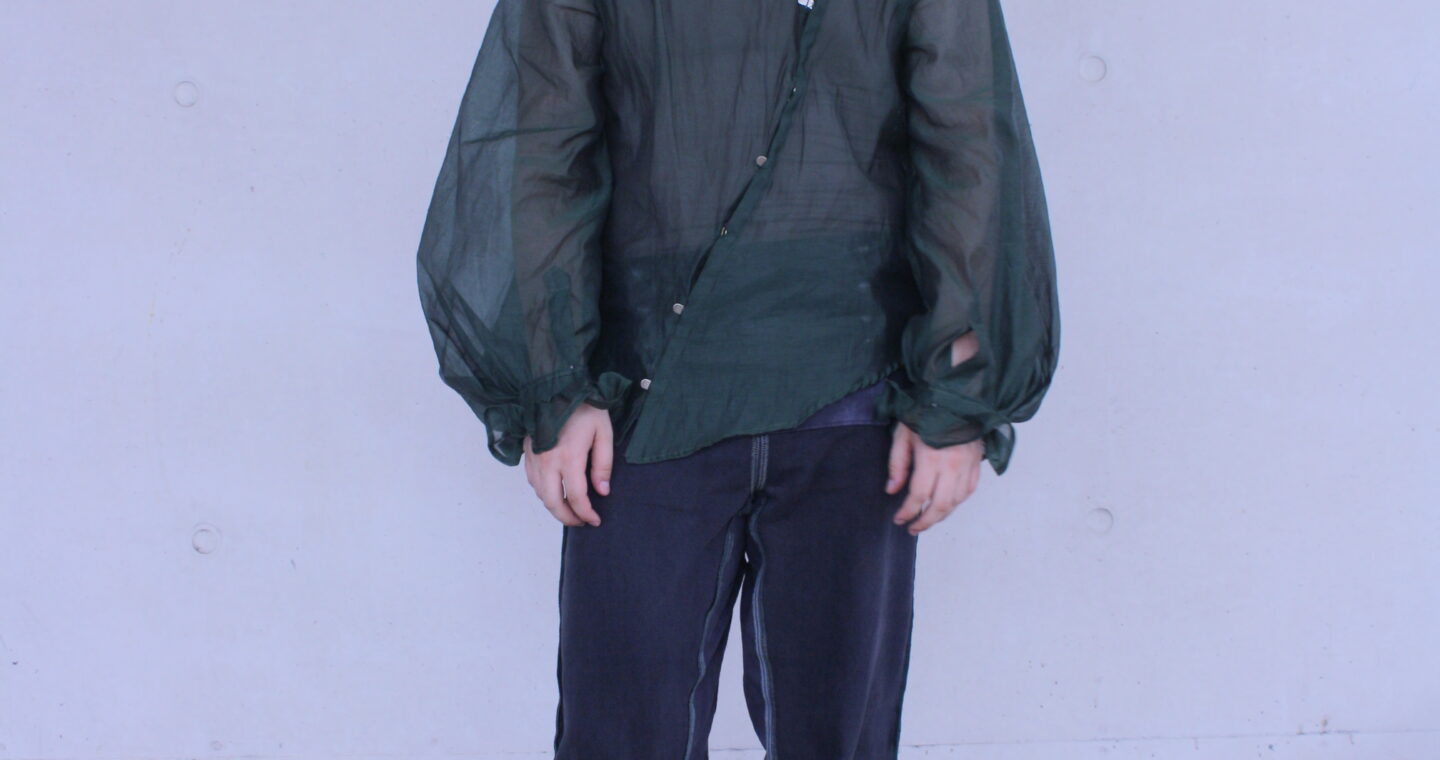
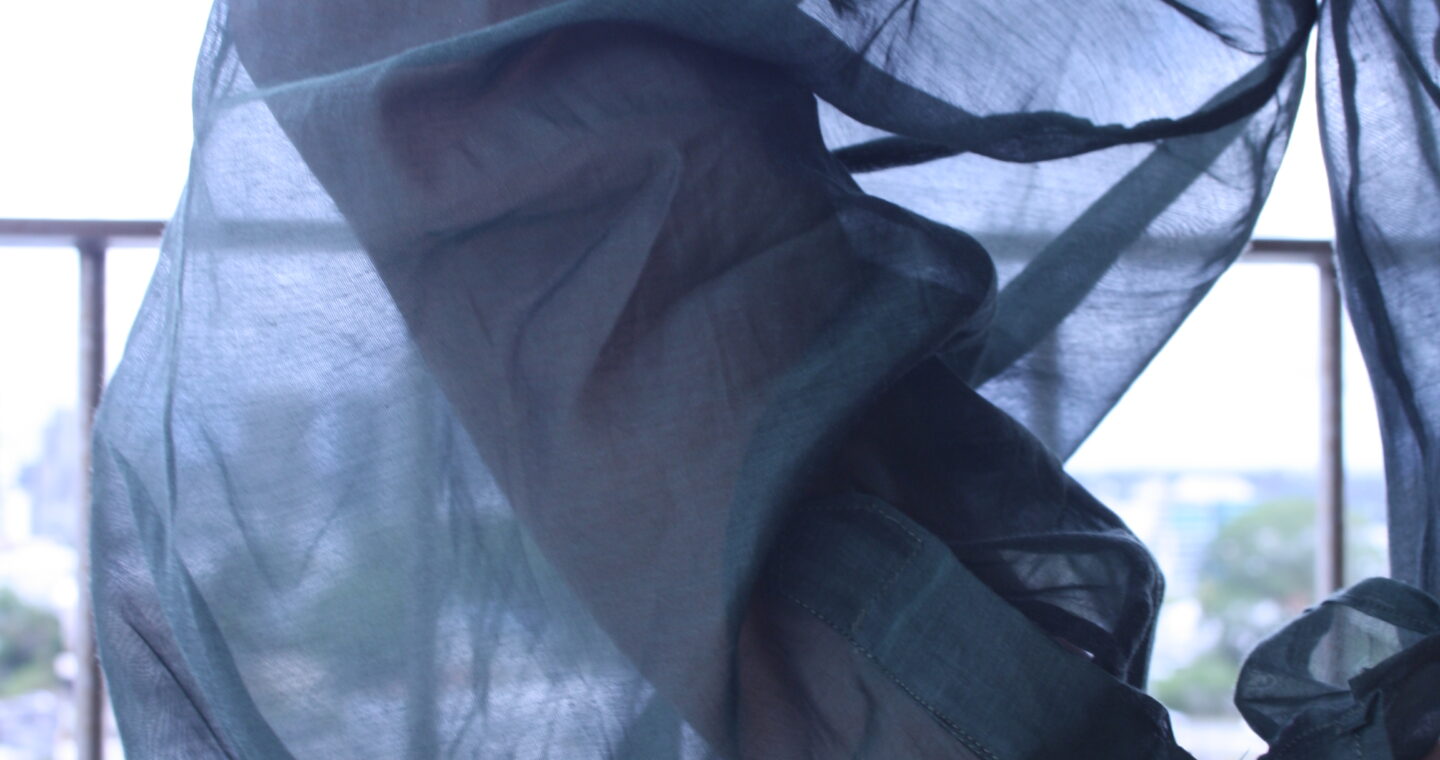
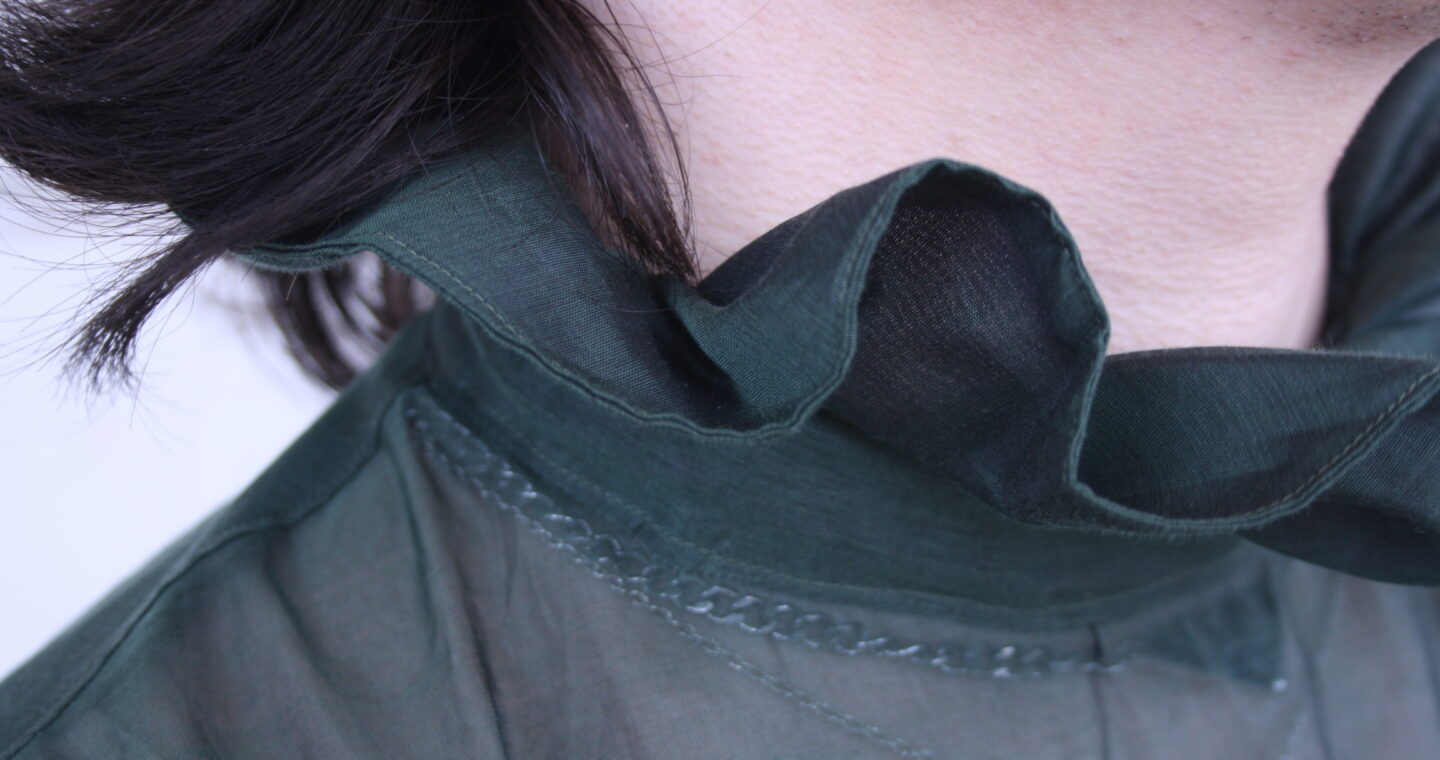
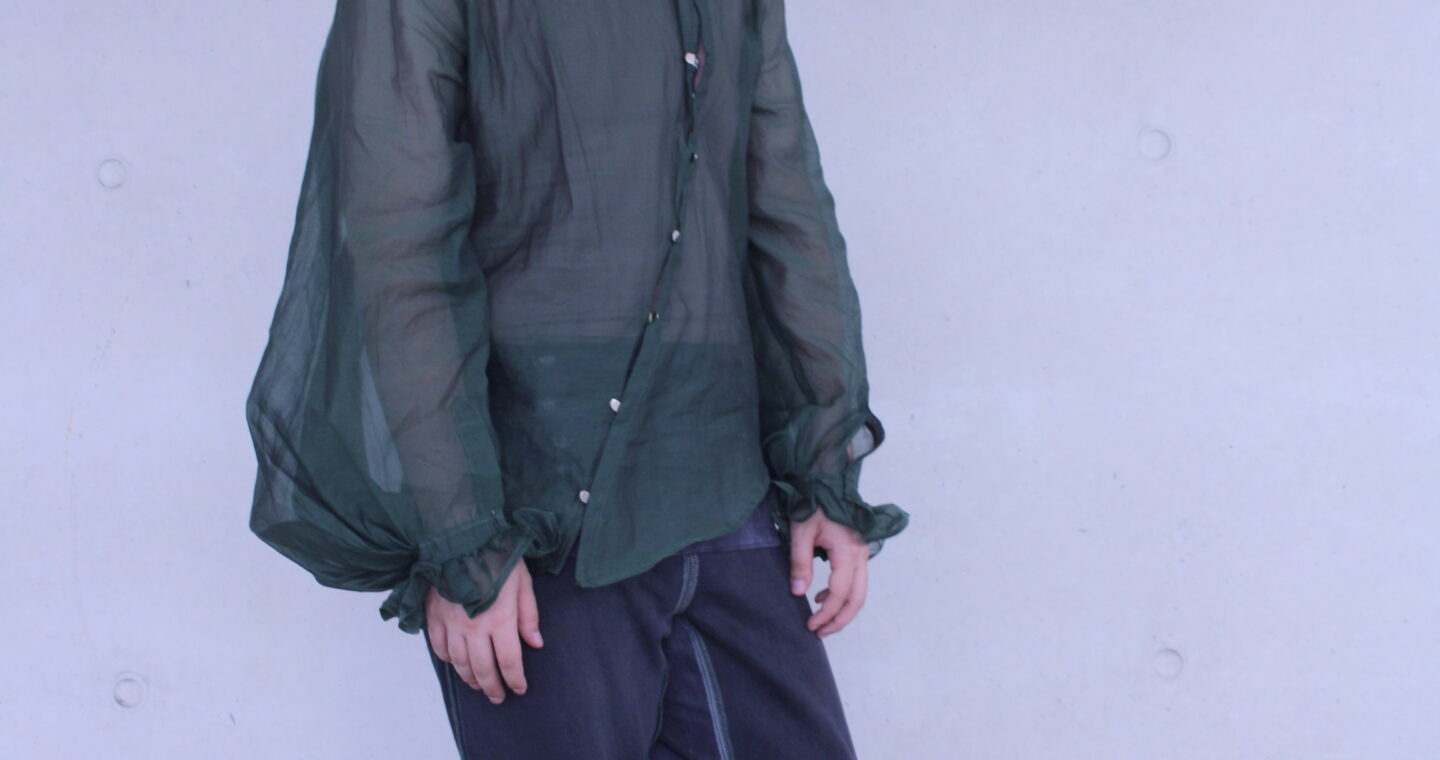
This final silhouette continues the visual exploration of garments warped through time. Regency-era and Romantic-period fashions often included bishop sleeves for practicality, voluminous skirts, sailor pants, and high collars, creating dialogue between the structured and draped, restrictive and freeing. The cotton organdy introduces a softness and femininity that contrasts with the structured construction of the garment, while the asymmetrical front placket and hand-sewn bar closures offer a sleek, contemporary reinterpretation of traditional fastening techniques. Expanding on this, the silhouette features exaggerated voluminous sleeves and open cuff plackets, providing the wearer comfort.
The collar construction further emphasises the balance between delicacy and structure. Silk organza is incorporated to provide additional support to the collar stand, strengthened by the extended seam allowance of the collar. These considered construction details preserve the intended shape against the lightweight, translucent organdy, allowing the garment to maintain its form while appearing almost weightless.
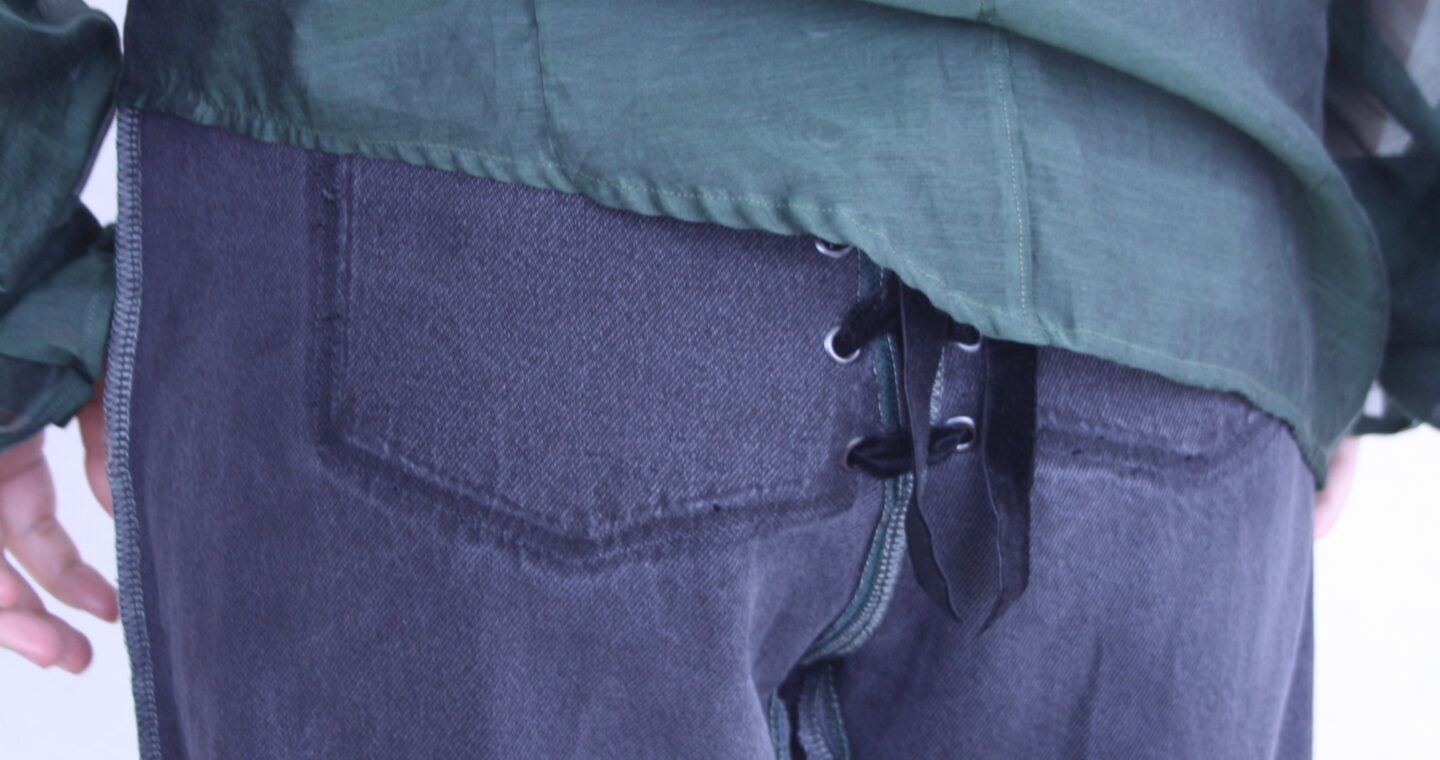
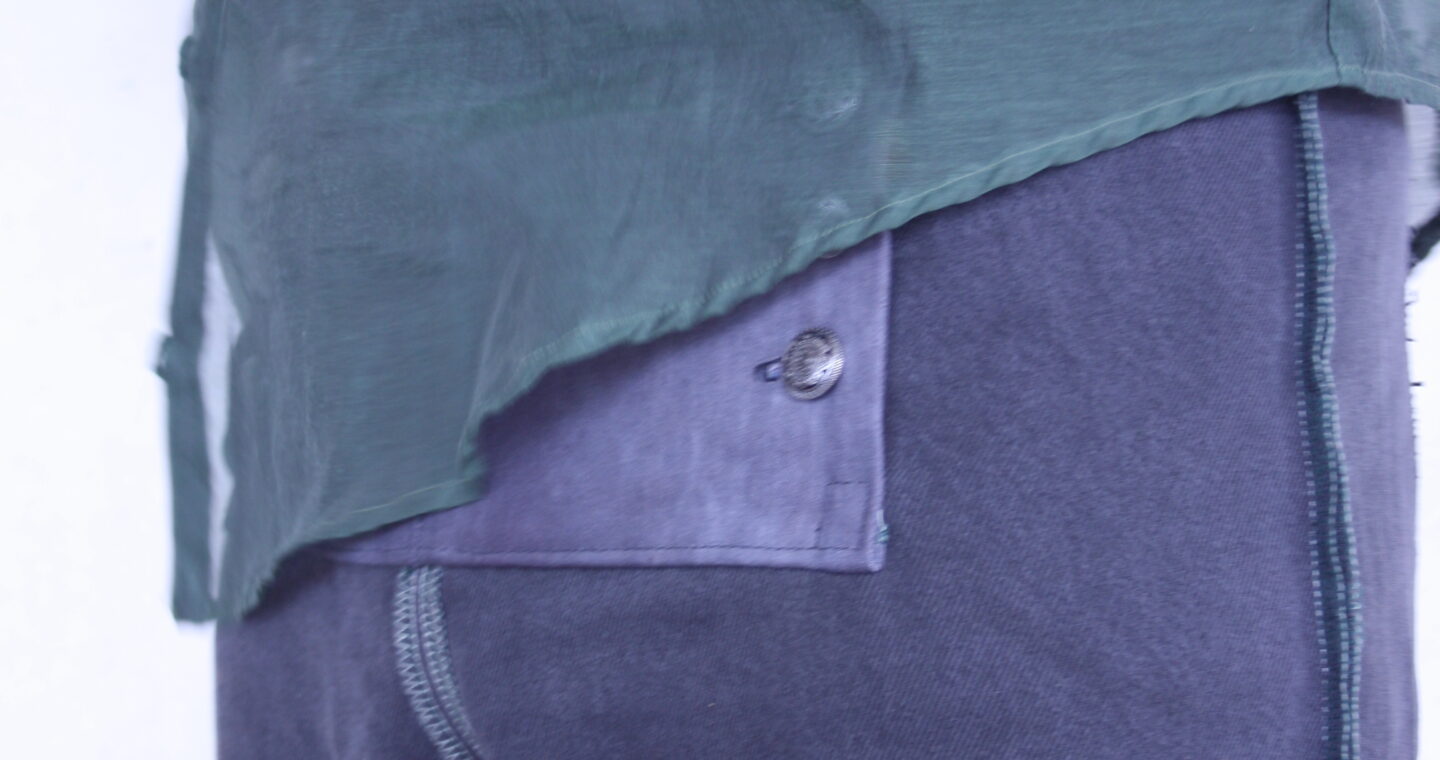
The trousers reinterpret traditional sailor pants through a contemporary lens, using deconstructed denim jeans. Historical tailoring is showcased with the implementation of a broadfall, replacing the conventional zip fastening. Inserted along the inner legs is dyed-black stretch denim, introducing textile contrast and improving freedom of movement. Overlocking is pressed open and topstitched onto the right side of the fabric, exposing the internal construction through contrasting shades of green and grey. This deliberate inversion of conventional finishing techniques becomes another manifestation of temporal warping, as the garment’s internal structure is displaced onto its exterior. Together, the silhouettes of the voluminous sleeves, the traditional sailor-pant construction, and the exposed seams establish a dialogue between historical reference and contemporary deconstruction, suggesting a garment reconstructed across different points in time.
(All materials used are reclaimed deadstock from The Fabric Store and The Sewing Lair, with the exception of the denim, which is upcycled from my own torn jeans)
Model: Nicholas Pearce
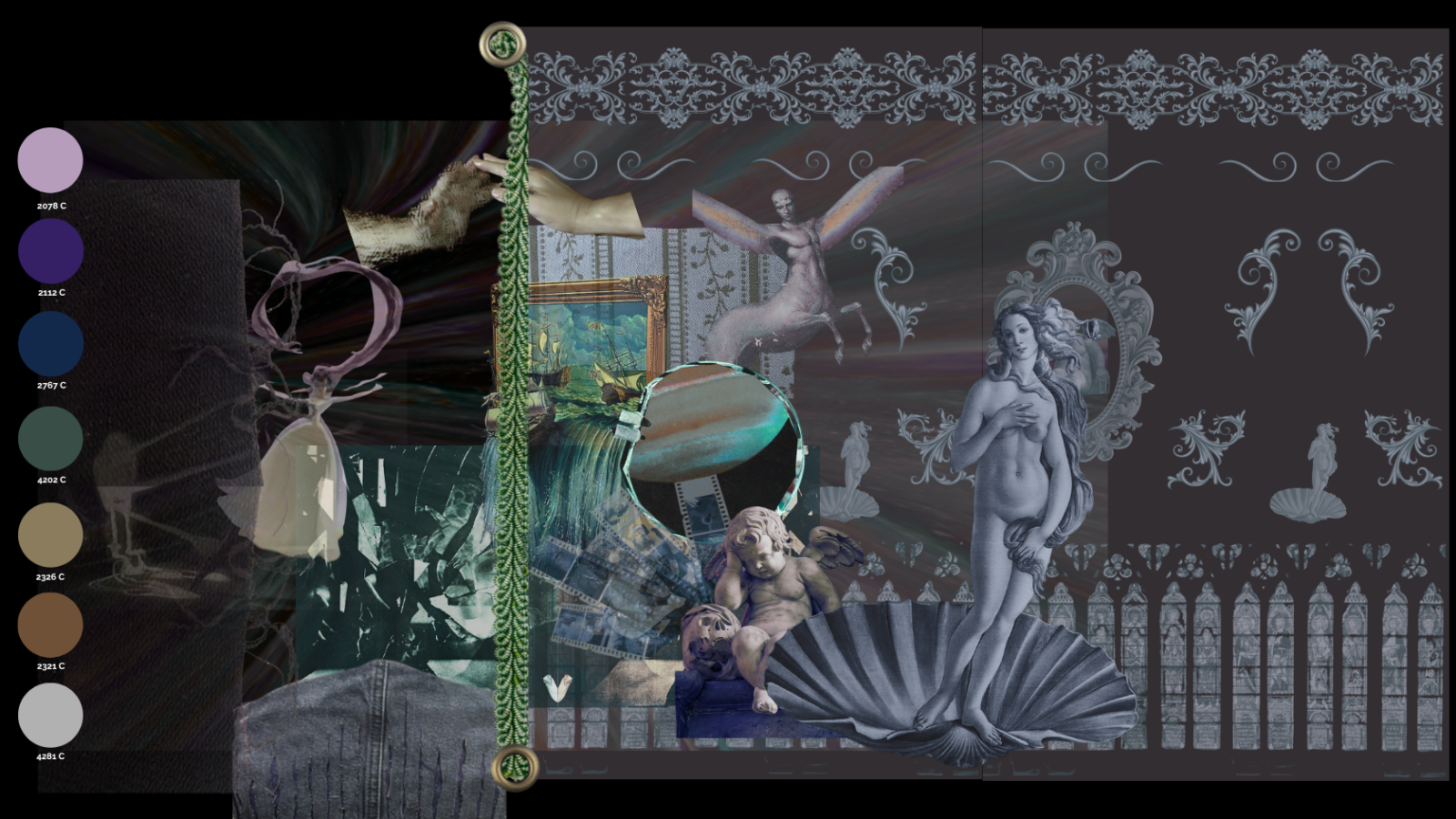
Collection moodboard
Melissa Magness
Melissa Magness is an emerging designer and aspiring costumier based in the Gold Coast/Yugumbeh region. Her designs convey narrative through silhouette, symbolism, and visual storytelling. Drawing on historical inspiration and contemporary applications, her work explores anemoia through the intersection of past and present, evoking an immersion that resonates with all.