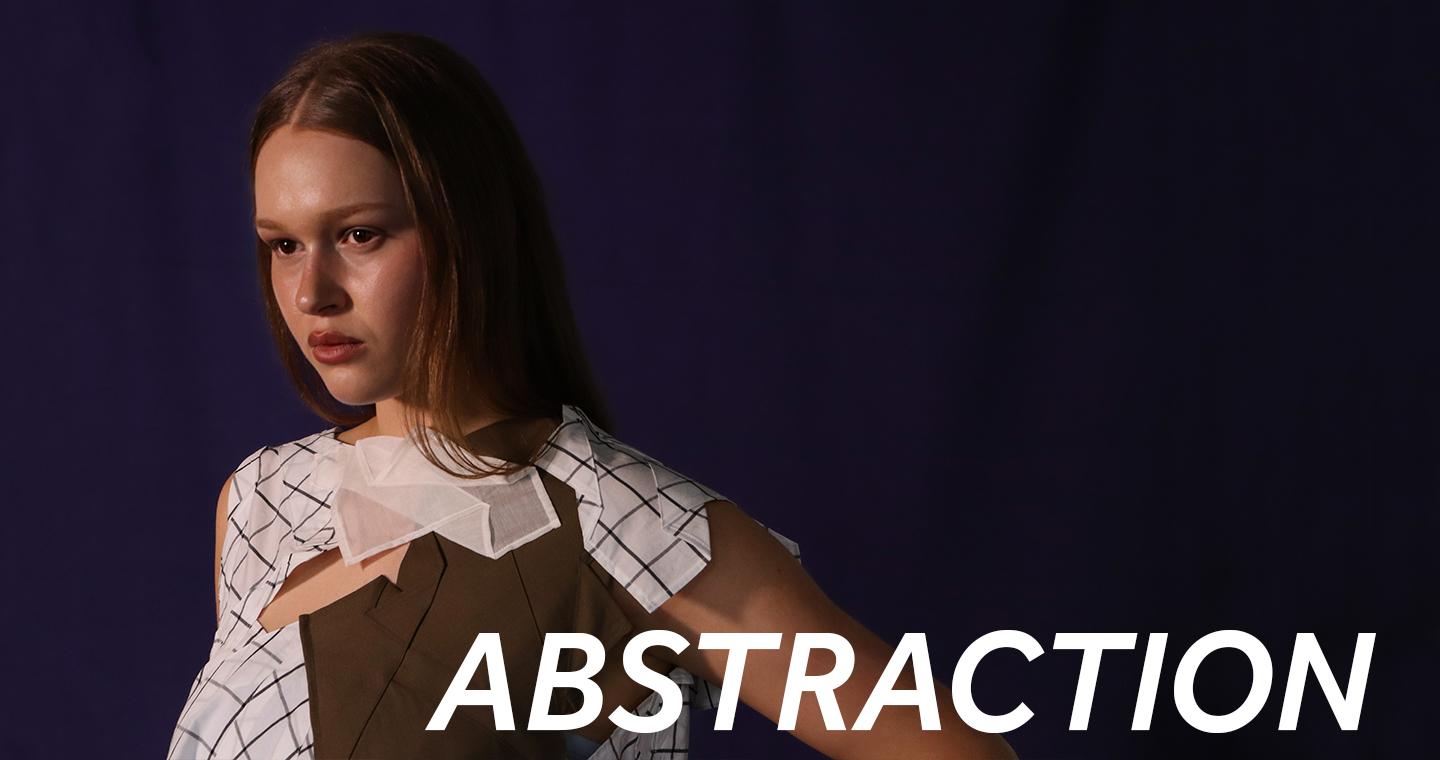
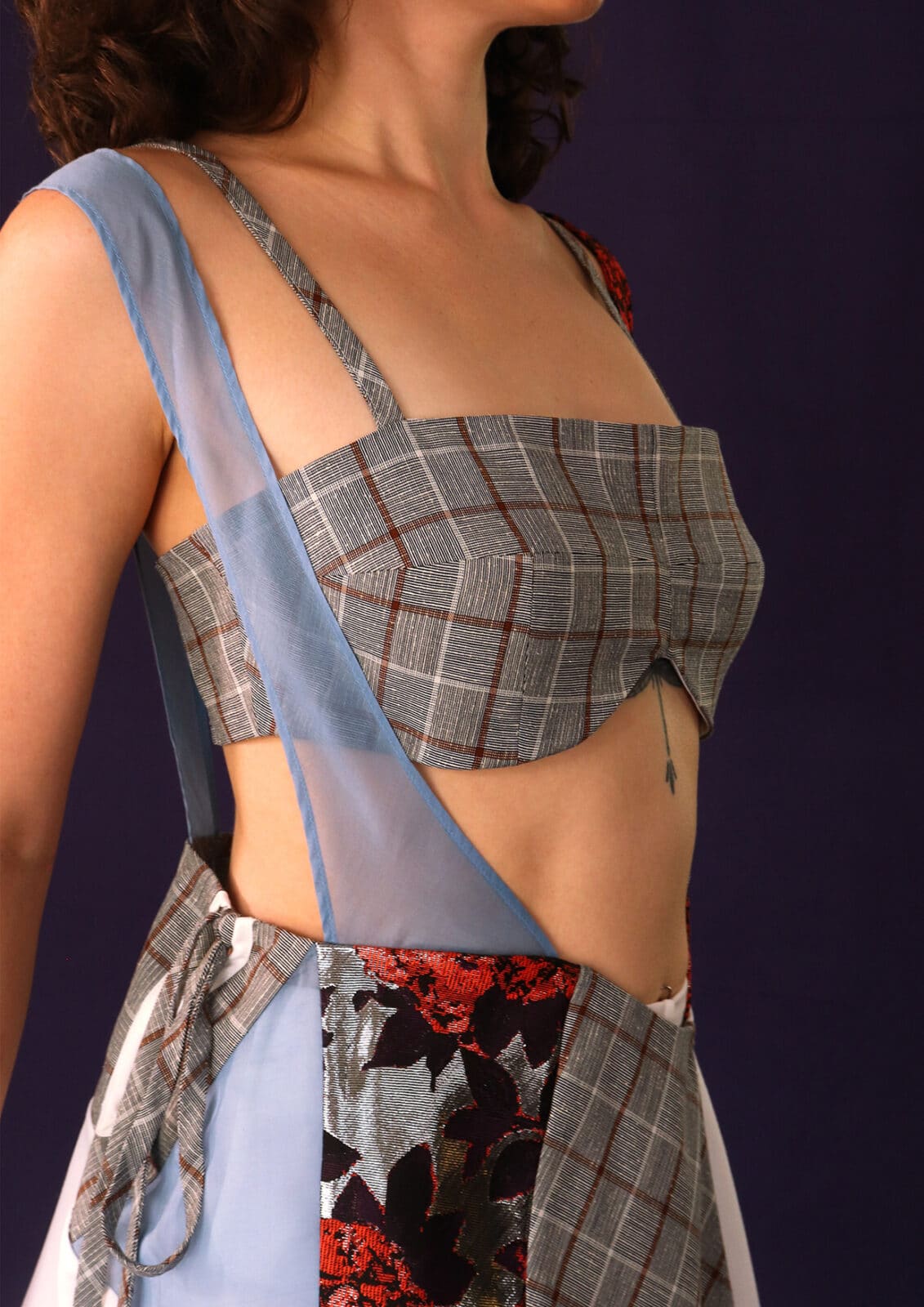
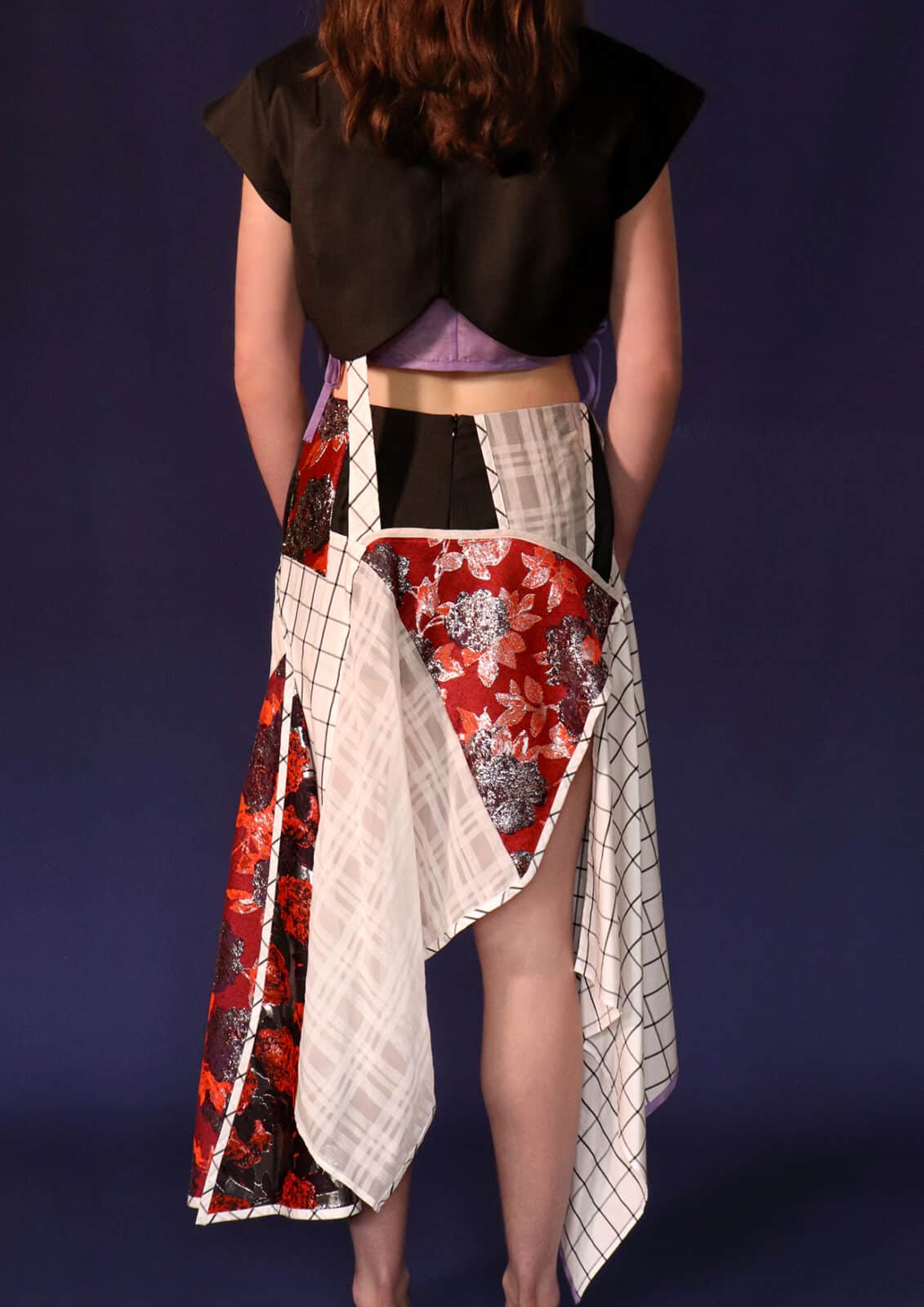
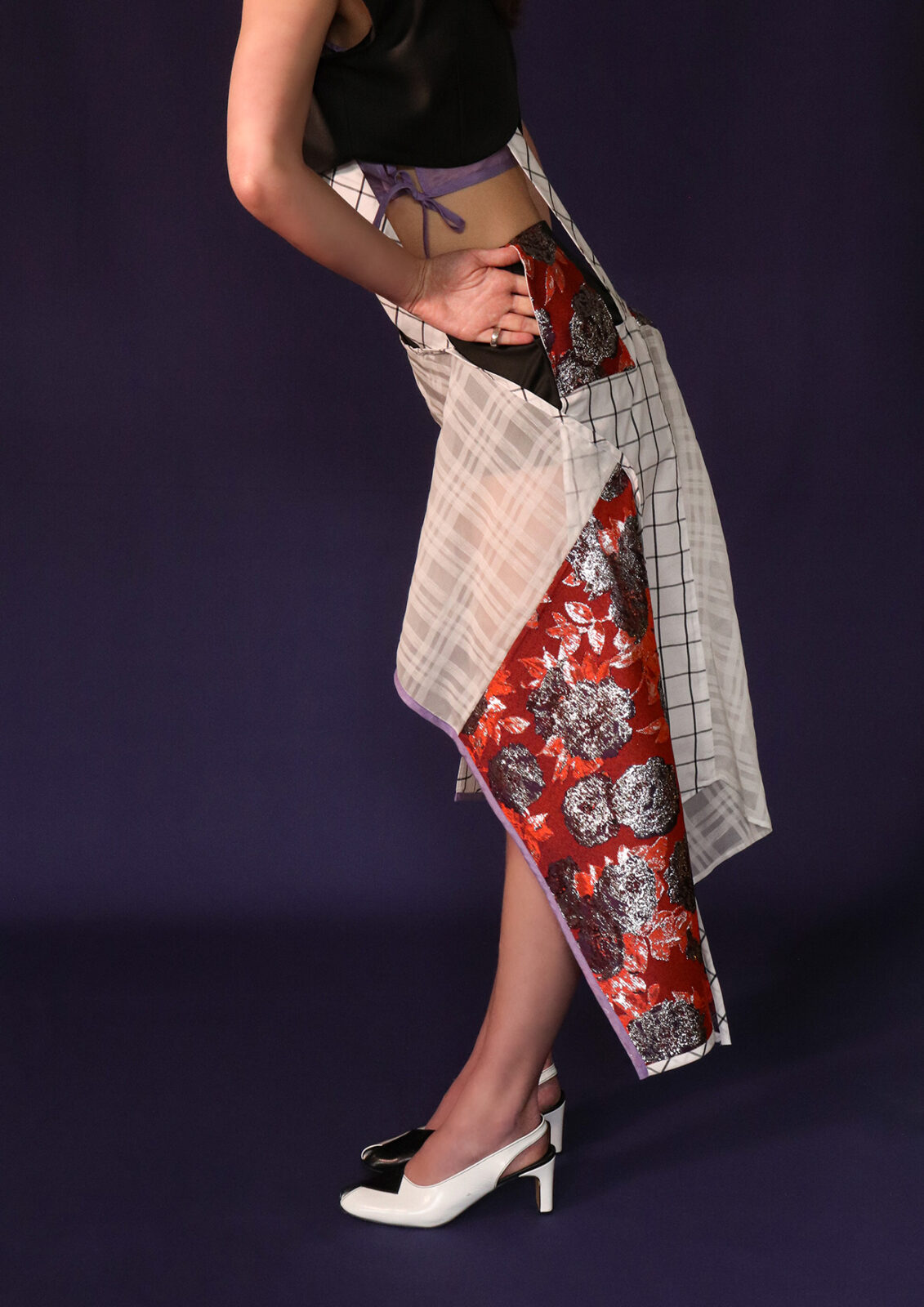
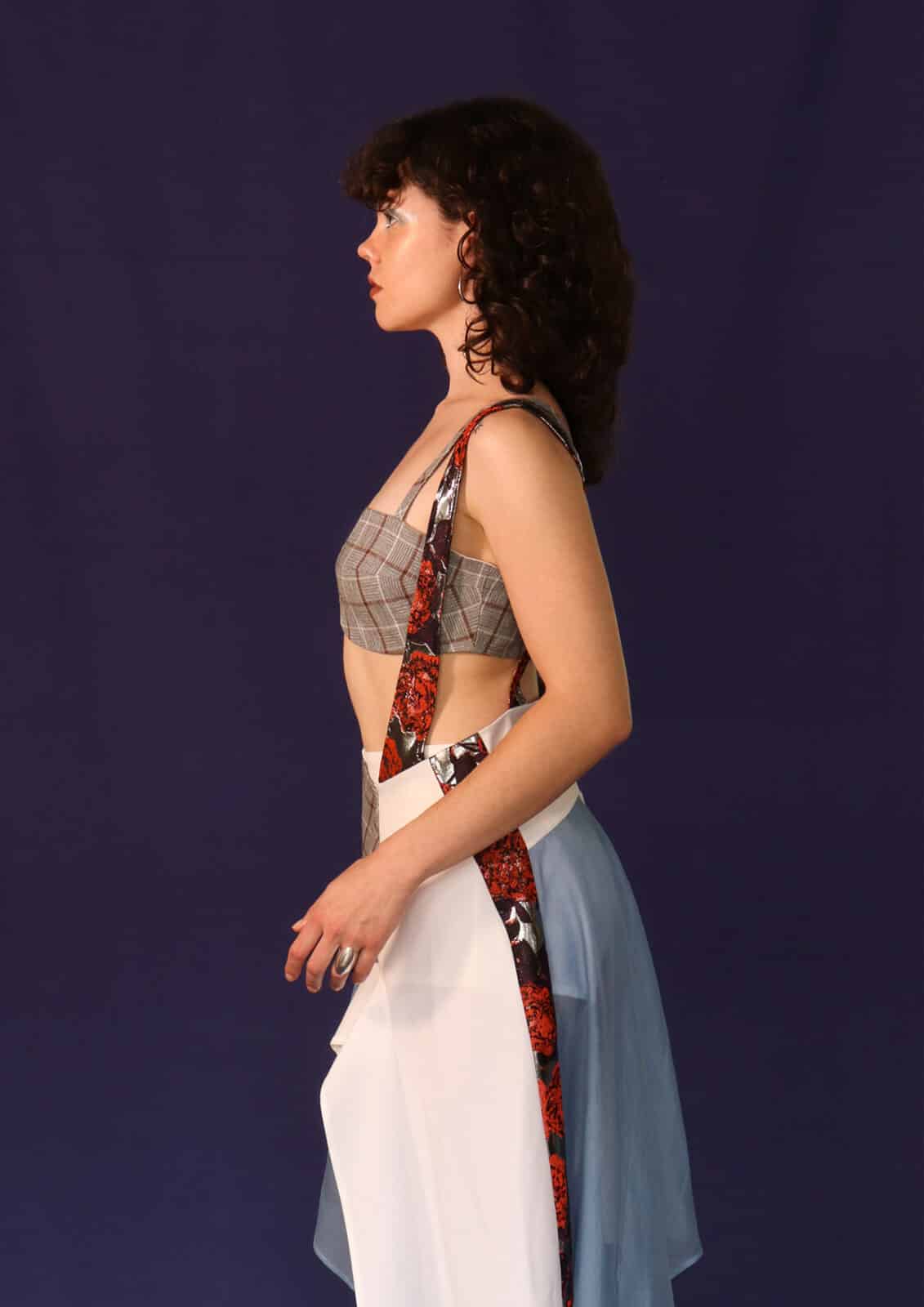
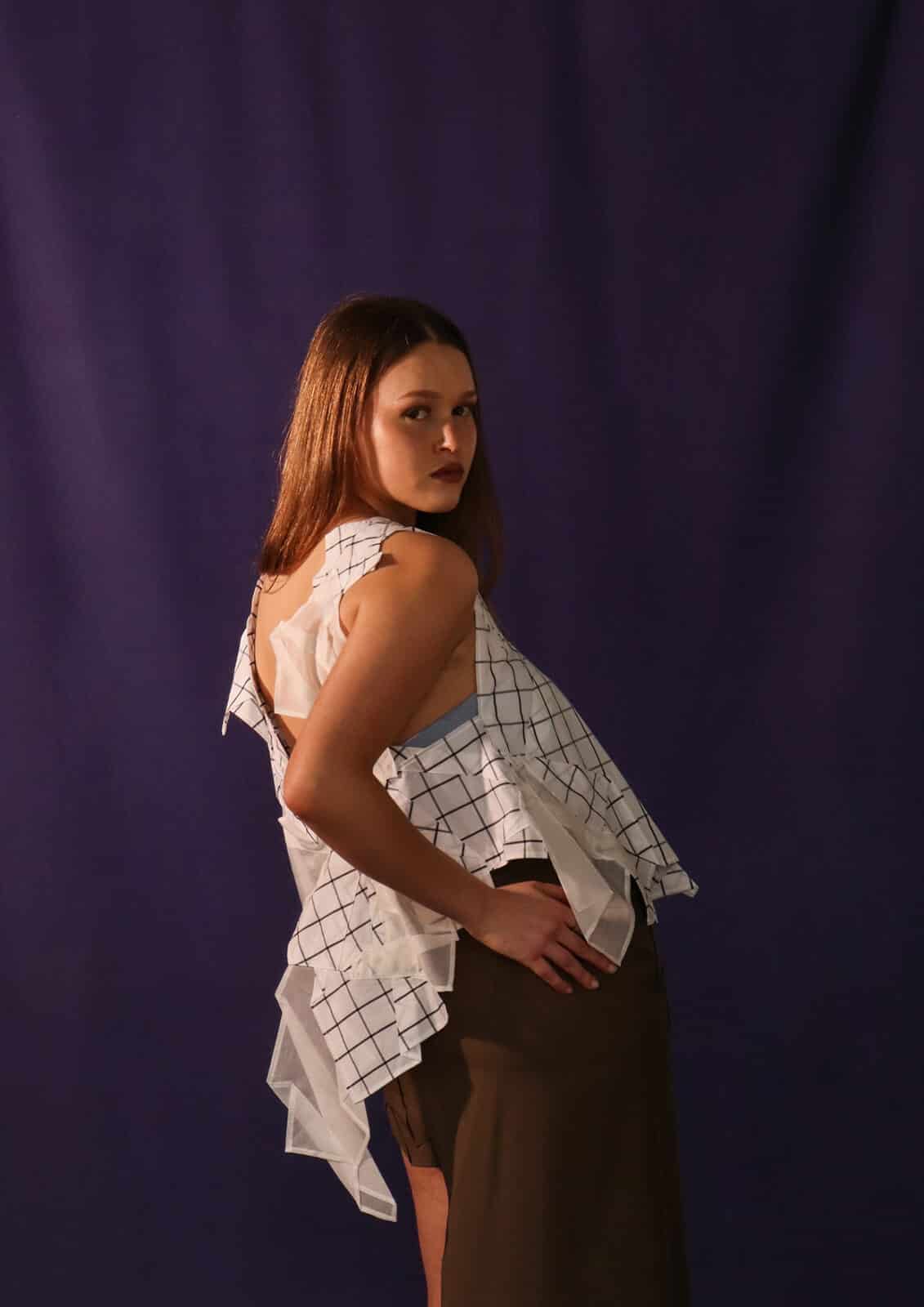
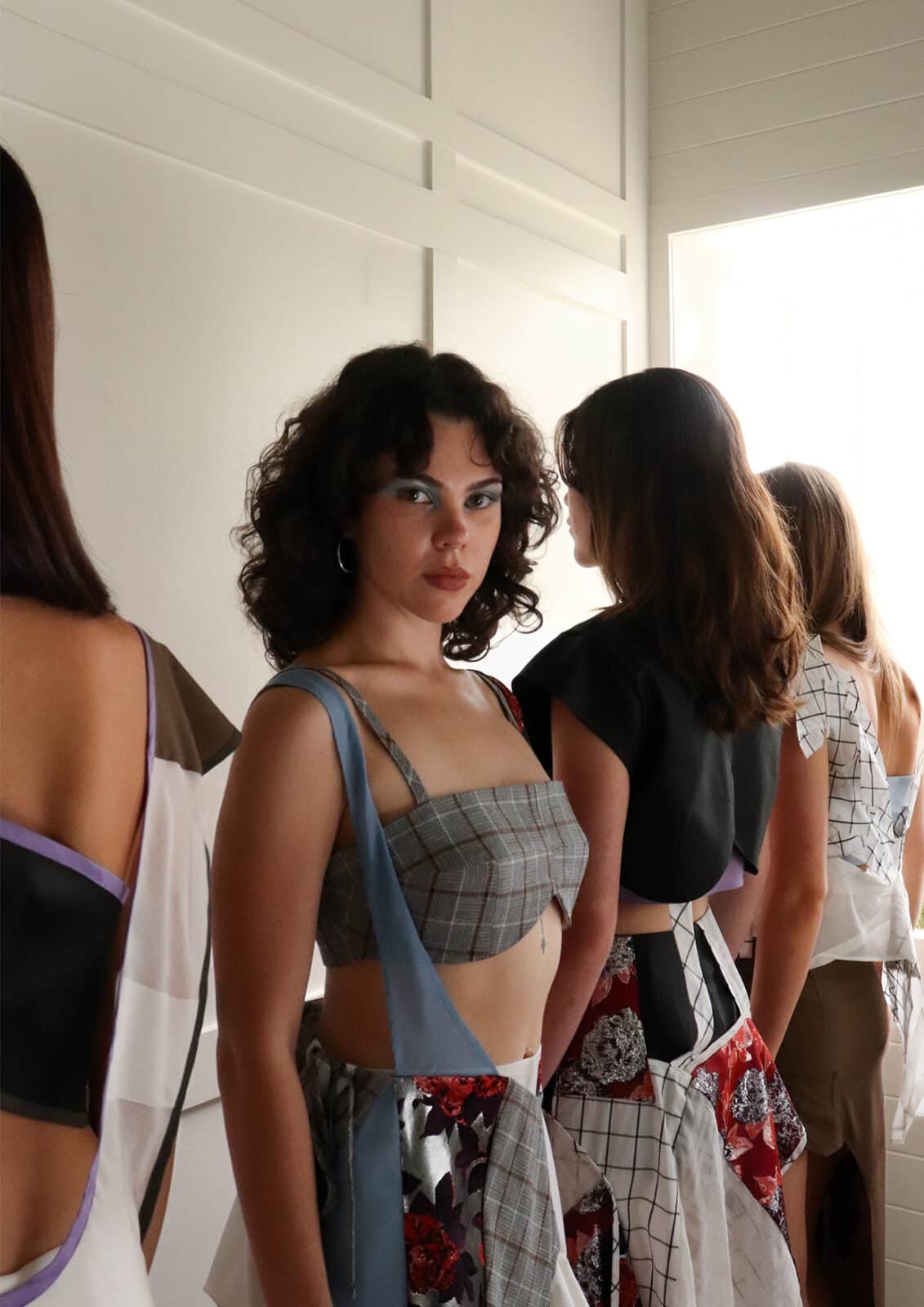
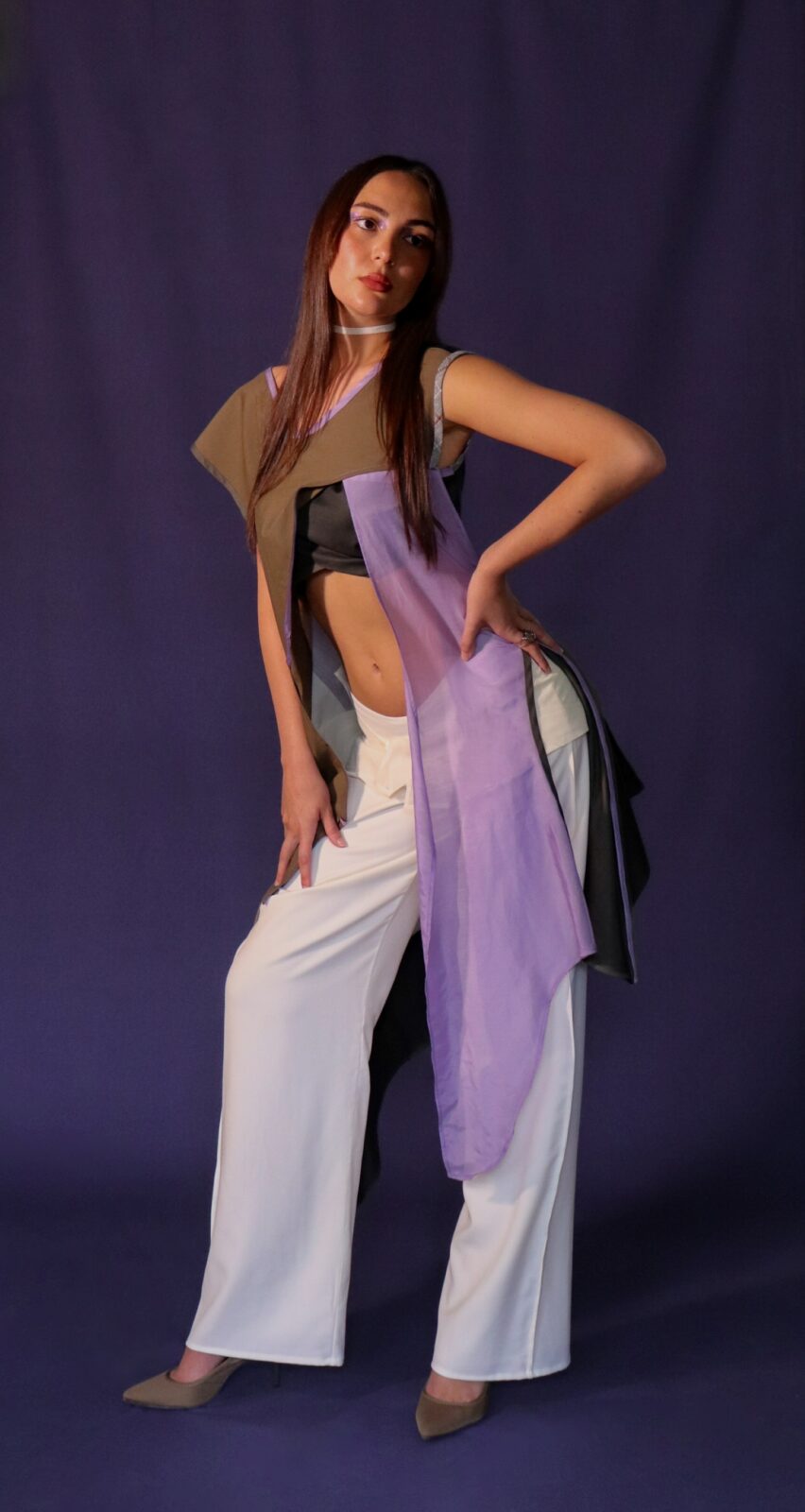
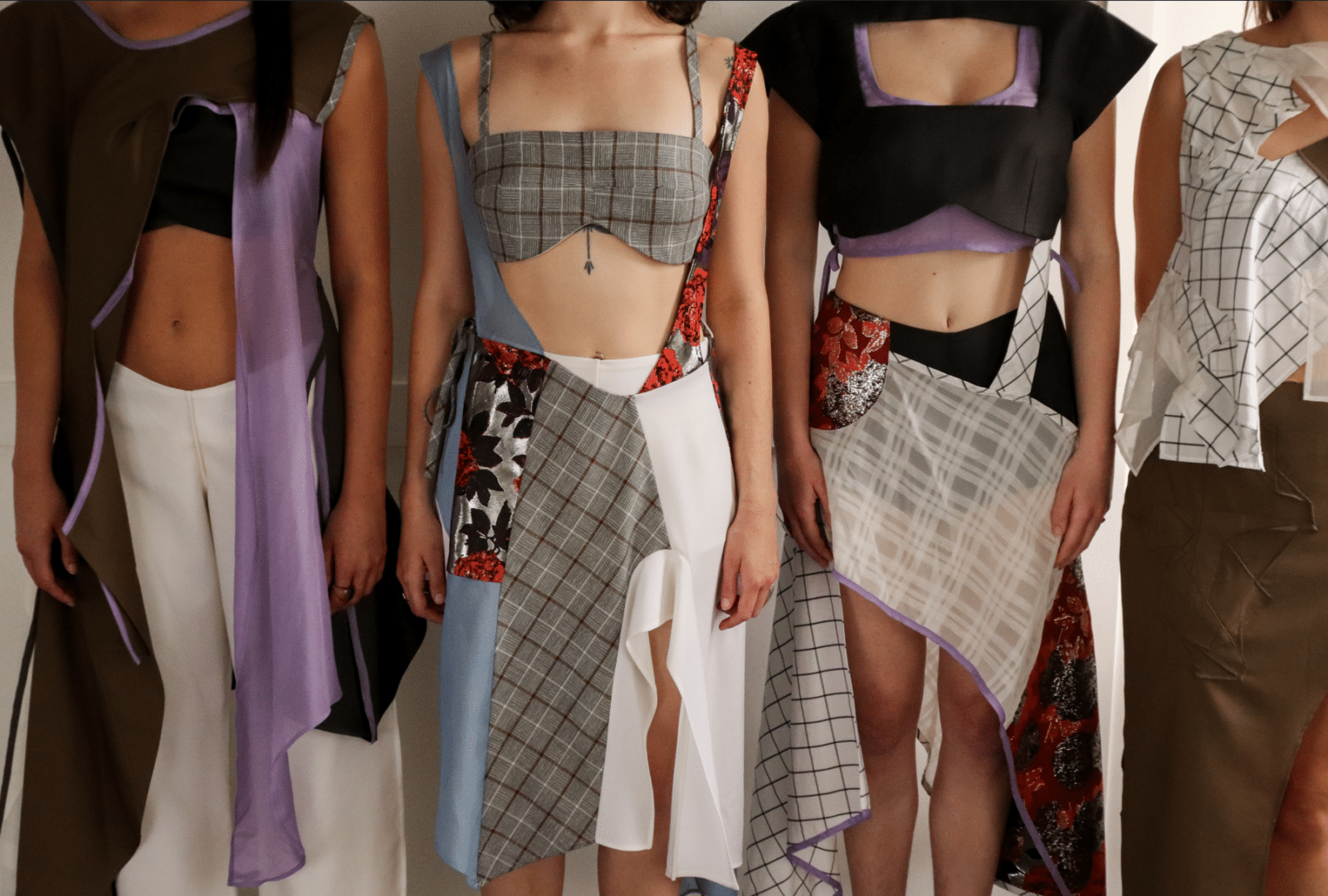
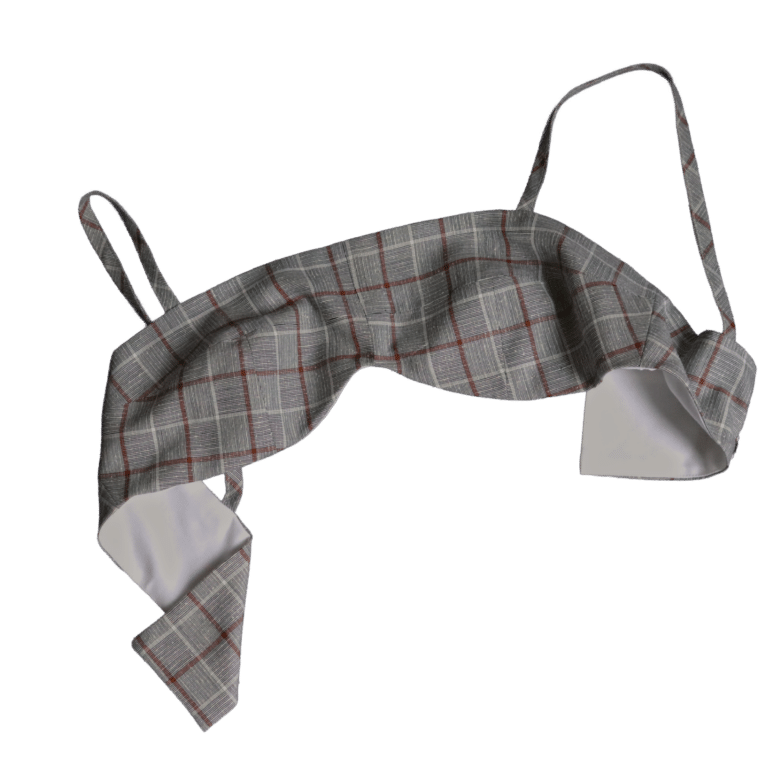
Cubism involves simplifying objects into their essential and conceptual forms - the process of Abstraction. Applied to this collection, geometric shapes, draped pieces that conform to the body, and contrasting fabrics call attention to the essential beauty of the feminine. Although inspired by Cubism, Abstraction repudiates Cubism’s history of altering women for the male gaze.
Abstraction is a tribute to Cubism. In Cubist art, the familiar objects of everyday life are discernible, despite being flattened, recoloured, fragmented and reformed. These processes of visual synthesis and reorganisation define Abstraction. Through simplification, Cubism alters the appearance of an object to more fully express its conceptual essence. But what comprises this essence is for the artist to interpret. In this way, Abstraction is both conceptual and personal; both remote to the everyday and intimate. The idea of intimacy, through sharing of experience and perception, informs the evocative atmosphere established in Abstraction’s imagery.
Photographer: Madeline Weale
Models: Evie McGonigle and Ava Statham
textile properties
folding, unfolding
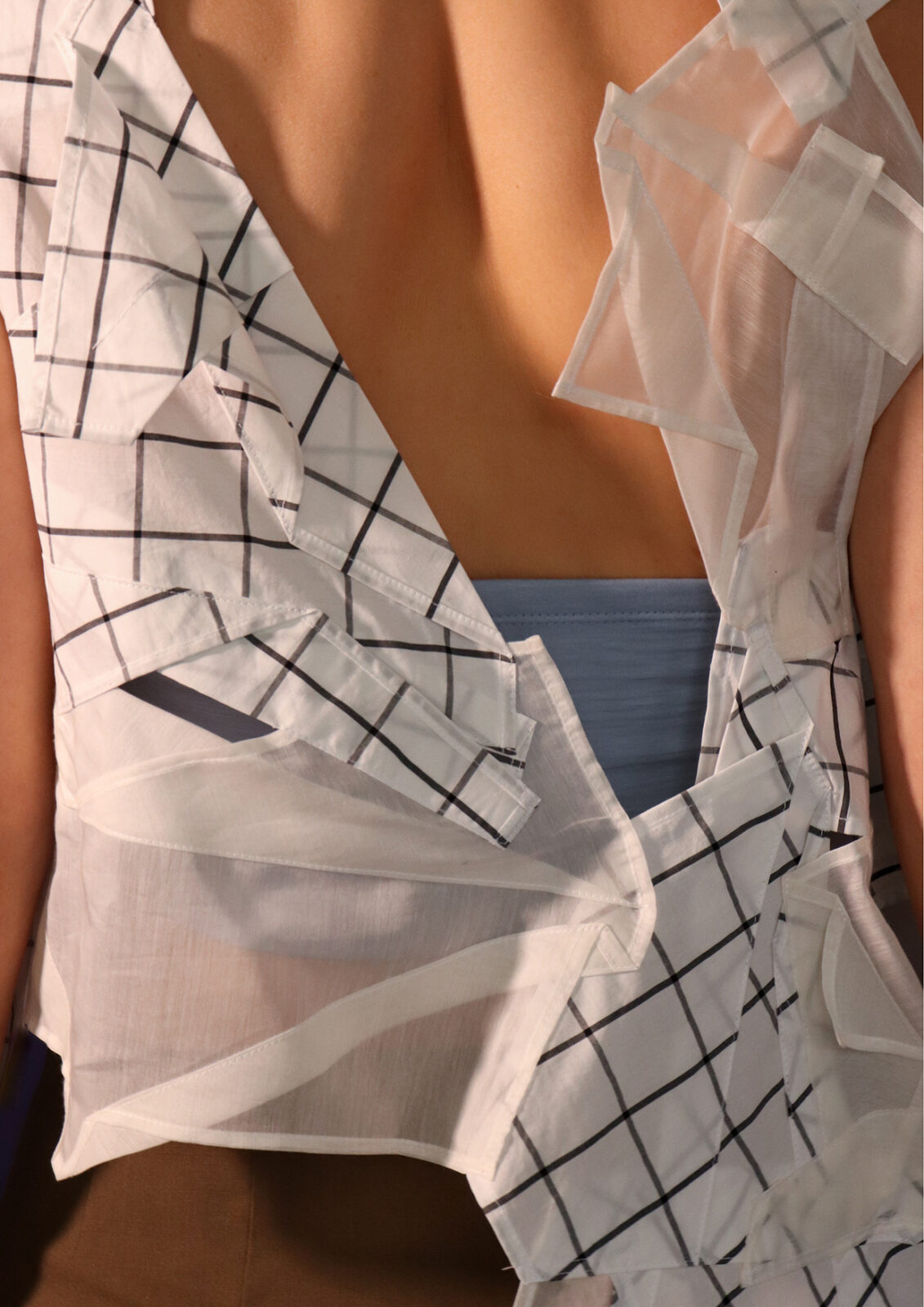
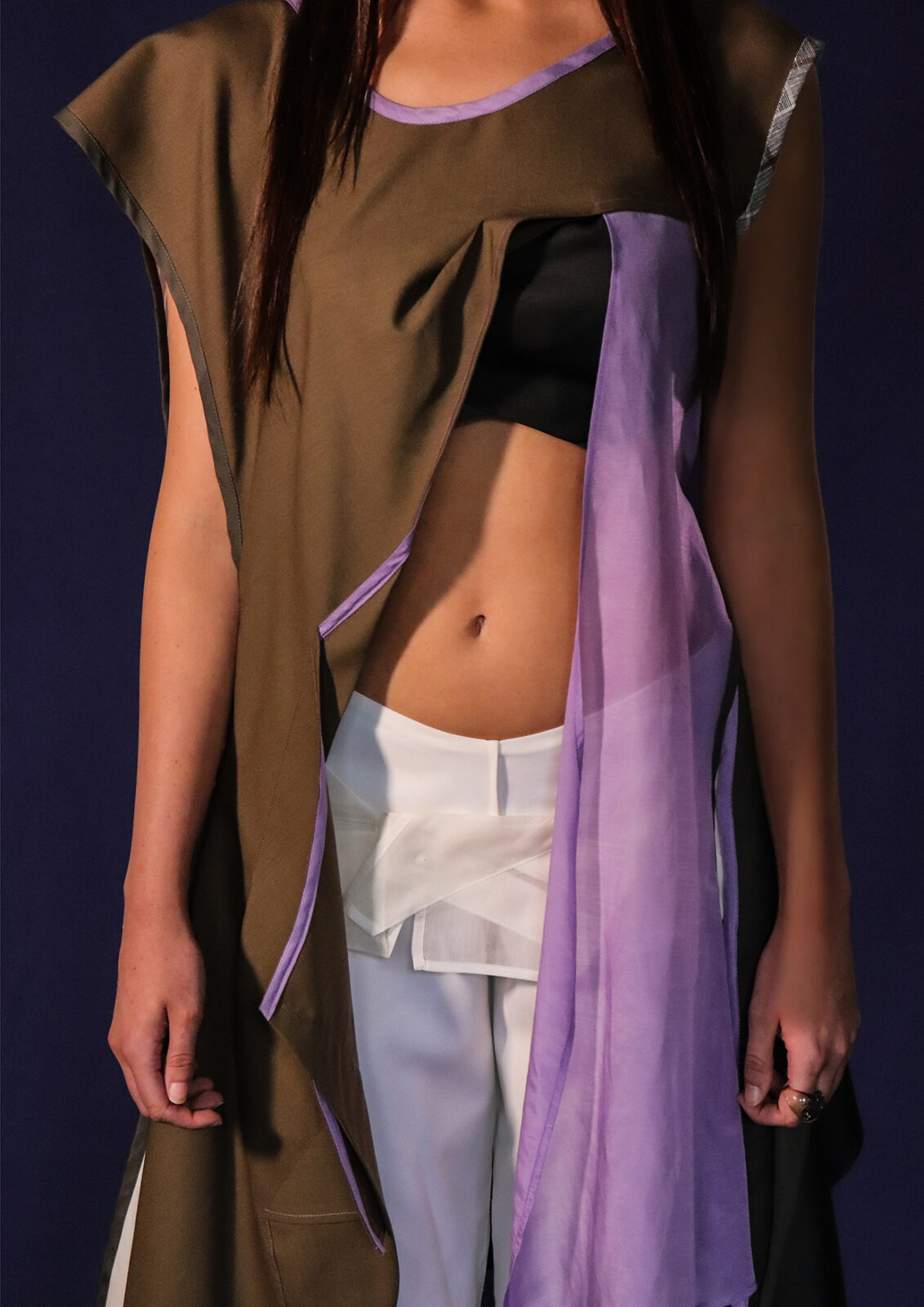
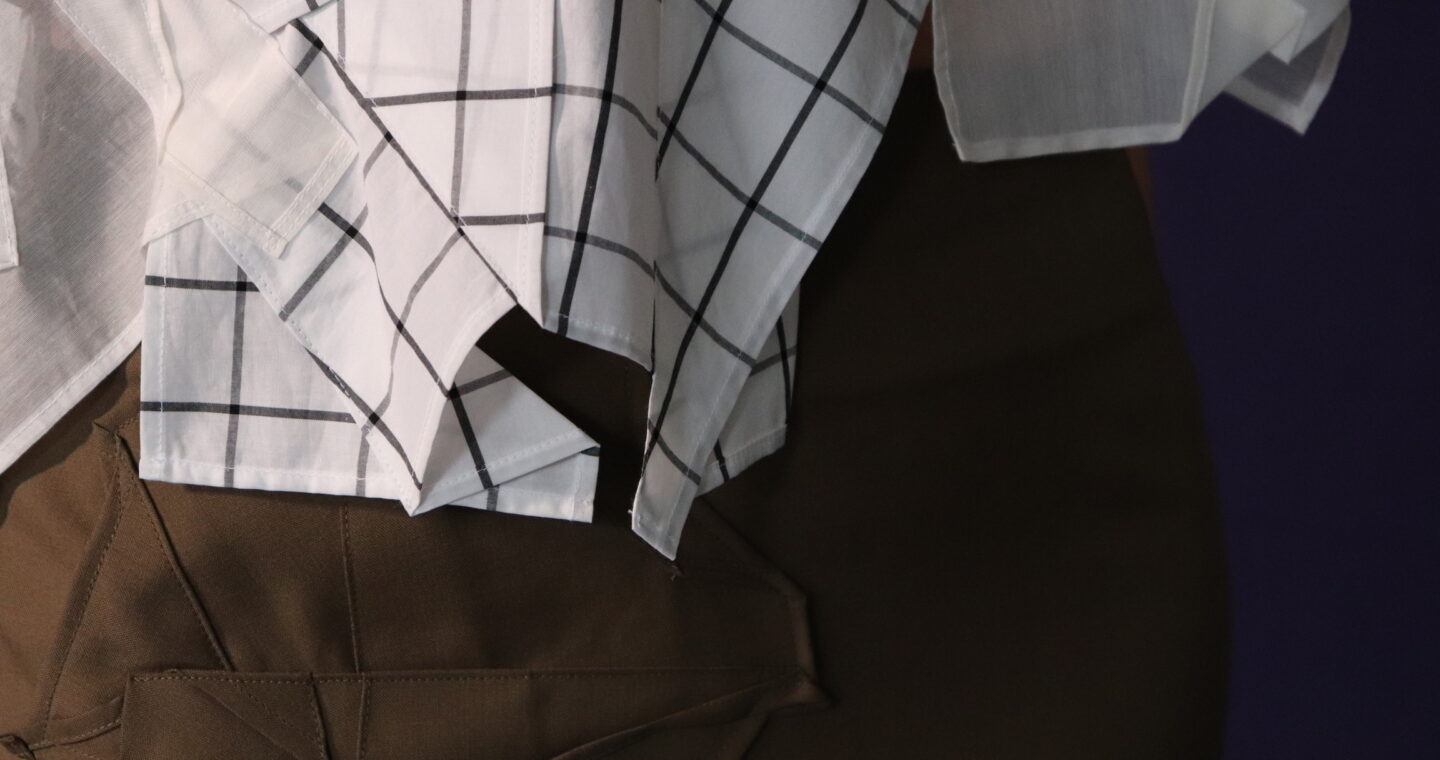
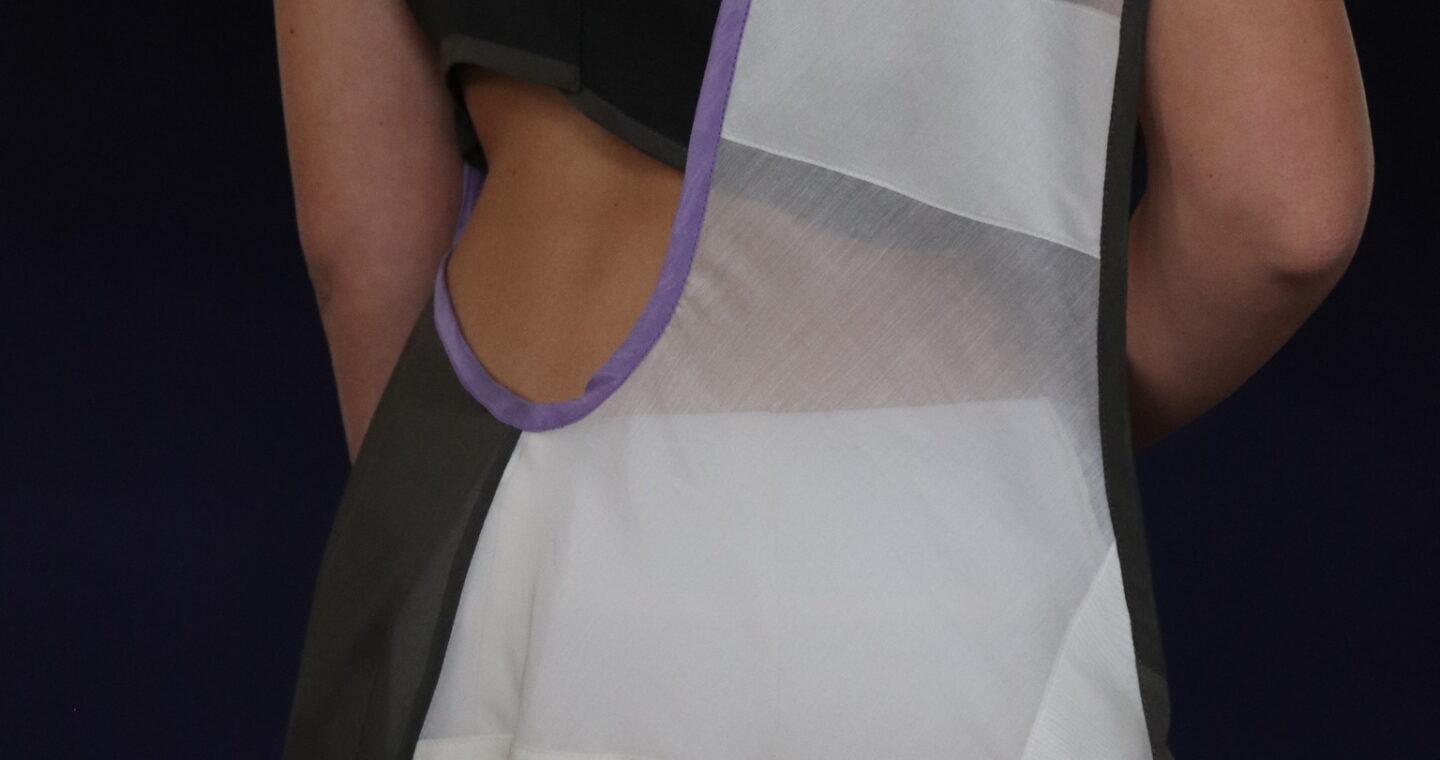
Two-dimensional shapes dominate each silhouette. The texture of the real world is reduced to its basic geometry, like in Cubist work. Though this third dimension is taken away, depth is reintroduced by the application of flat, folded fabric manipulations and layering of sheer over opaque. Perhaps another aspect of the garment – another panel or layer – is just out of sight, imperceivable.
Photographer: Madeline Weale
Models (left to right on bottom image): Heimata Currie, Evie McGonigle, Ava Statham, and Madison Billie.
collaging with fabric
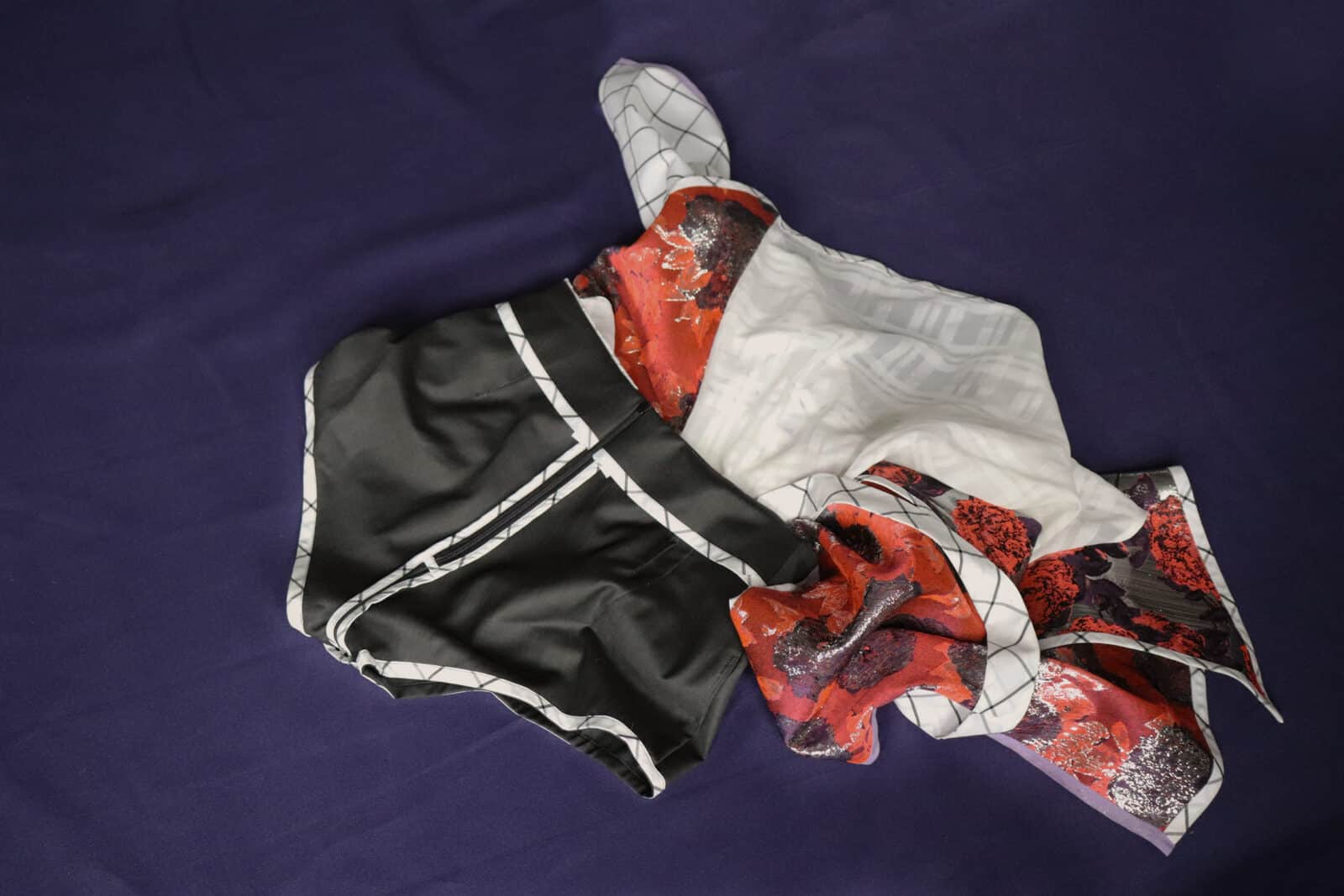
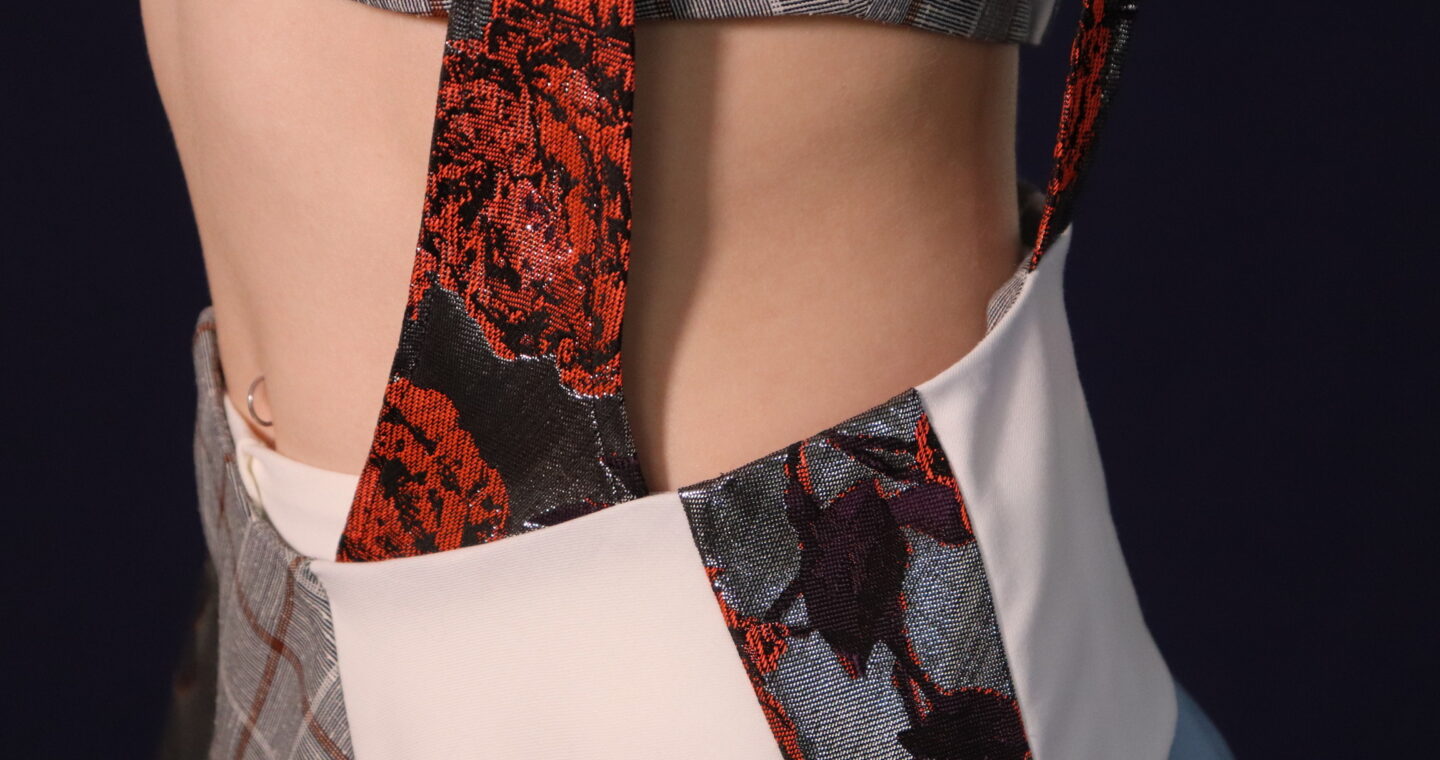
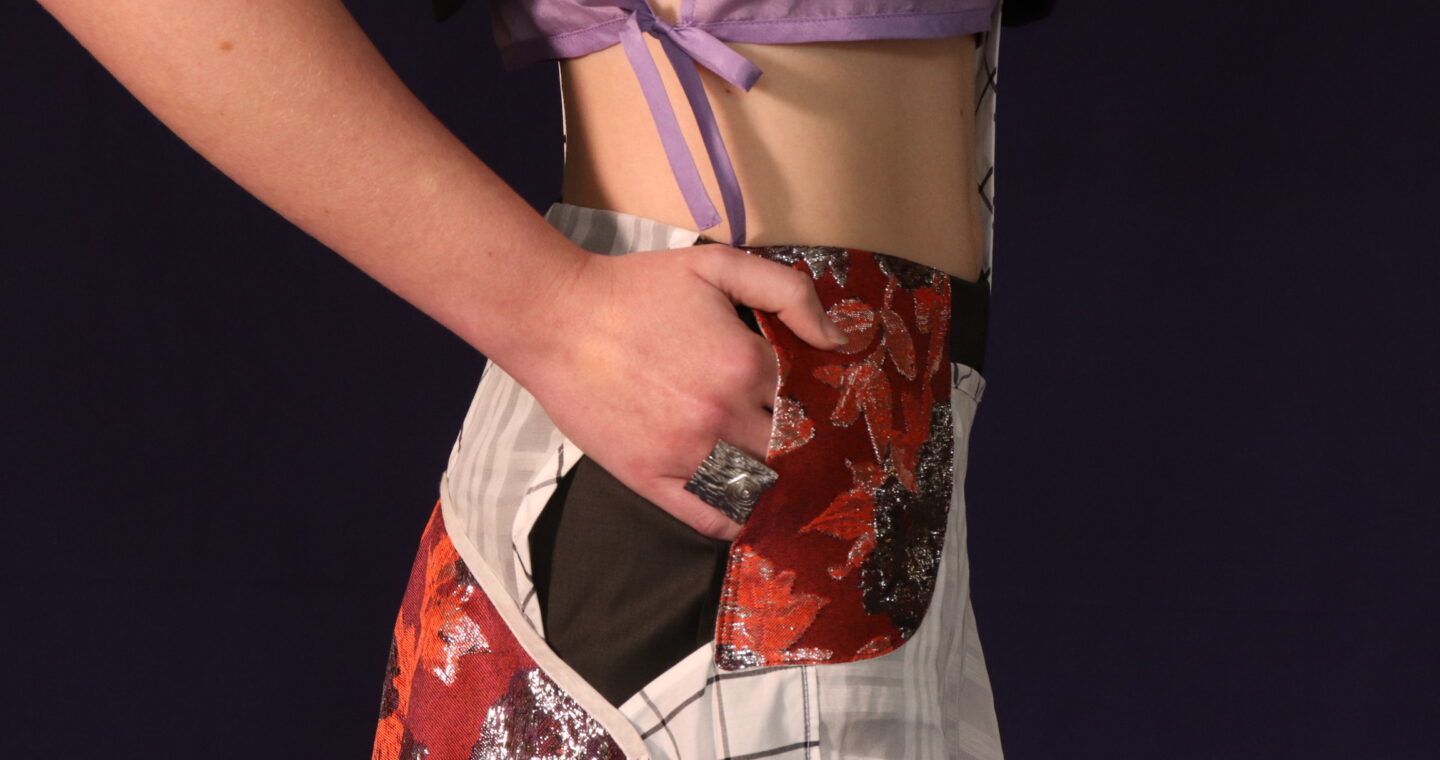
Contrasting colours and patterns are drawn from the collage-style compositions of Synthetic Cubism. The unexpected use of a floral jacquard, for example, references Picasso’s application of floral wallpaper in Guitar, Glass, Bottle of Vieux Marc (1913), a material he often used when referencing the female form. Picasso’s influence on the direction of this collection extends beyond fabric. While his contributions to the Cubist movement are undeniable, Abstraction strongly condemns his mistreatment of women, and the relegation of women to be objects of inspiration to brilliant men during the Cubist period. Abstraction subverts the image of a man in a suit directing naked and vulnerable women for his masterpiece. Women are dressed by a woman, in both florals and wool suiting; they are neither objects of use or made masculine themselves.
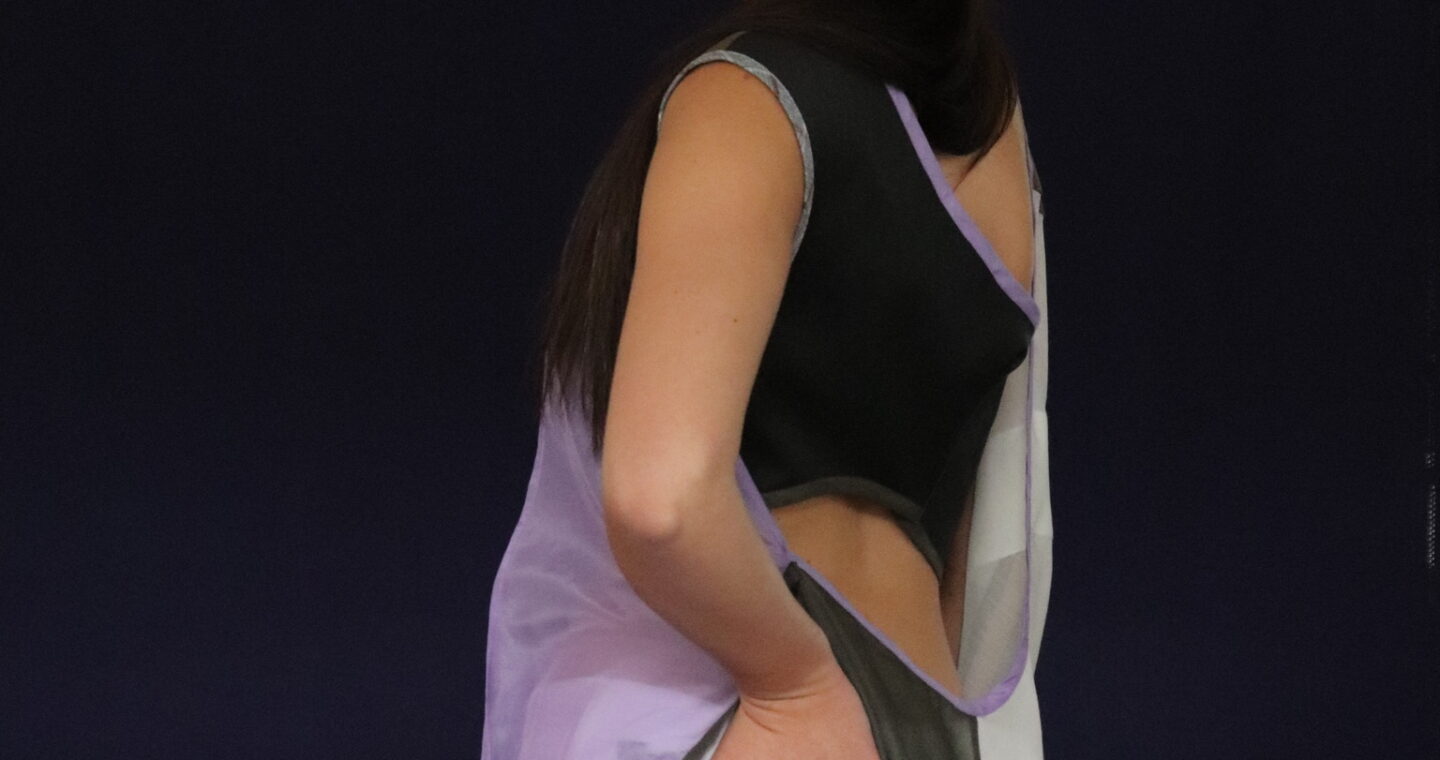
The wool suit is an enduring symbol of masculinity, status, and intellect. Looking back to the Cubist period, one could visualise a circle of artists, all men, reclining and enjoying a smoke whilst reflecting on their latest masterpiece. In line with the rejection of the mistreatment of women by Cubist artists like Picasso, Abstraction reclaims the fabric of the wool suit to create tailored foundational garments that beautifully frame the female form. Almost all of the garments from this collection were developed through draping. Those developed through flat patterns were cut away to create flattering V-shapes at the waist and sweeping curved cut outs.
Inside-out
Primarily in the form of high-quality suiting, sourced from Textile Merchant and The Fabric Store, wool comprises the majority of this collection. Simran favours this fabric, and strives to use woolen fabrics, in all of her collections. The emphasis on wool as a hero fabric derives from her belief that wool is the superior eco-friendly fibre. Wool is regenerative, can be farmed responsibly and sustainably, and has the potential to be grown locally in Australia and New Zealand, reducing its carbon footprint.
The suiting fabrics have been used in both innovative, draped patchwork designs and tailored garments to best showcase its versatility. In neutral tones of white, grey, charcoal, and khaki, the smooth fabric mimicks the flat forms of Cubist painting in real-life.
Most non-wool fabrics were deadstock materials sourced from The Fabric Store. This includes the eye-catching floral jacquard, supple cotton/silk voile, and elegant cotton/silk organdy. Using deadstock fabric guarantees that designs are more exclusive and allows Simran to play a part in waste-reduction in the fashion industry. Furthermore, it allows her, a student, to access designer fabrics without the hefty price.
behind the scenes, with the silhouettes
Each silhouette is rich in colour, pattern, texture, and shape. The wearer can delight in the small details of this collection as much as the careful composition of the overall look.
abstraction, up close
Photographer: Madeline Weale
Models (left to right): Heimata Currie, Evie McGonigle, Ava Statham, and Madison Billie.
Collection Intention
The garments in Abstraction preserve and ornament the inherent beauty of the woman instead of altering her for a man’s magnum opus. In Abstraction, you should see only the presence of women as such, never the absence of a man.
Simran Mackrani
When our clothes balance comfort, sophistication and surprise, fashion becomes accessible and the everyday is elevated. This is the focus of Simran Mackrani's design. Her garments represent both a reaction against the dominance of 'casual' in day-to-day wear, and the importance of imbuing every outfit with novelty and interest. She achieves this by subverting traditional forms, juxtaposing patterns and fabrics, and adding unusual details. Often, her work draws inspiration from art movements, both visually and conceptually. In this way, she seeks to renew the connection between art, culture and everyday dress.